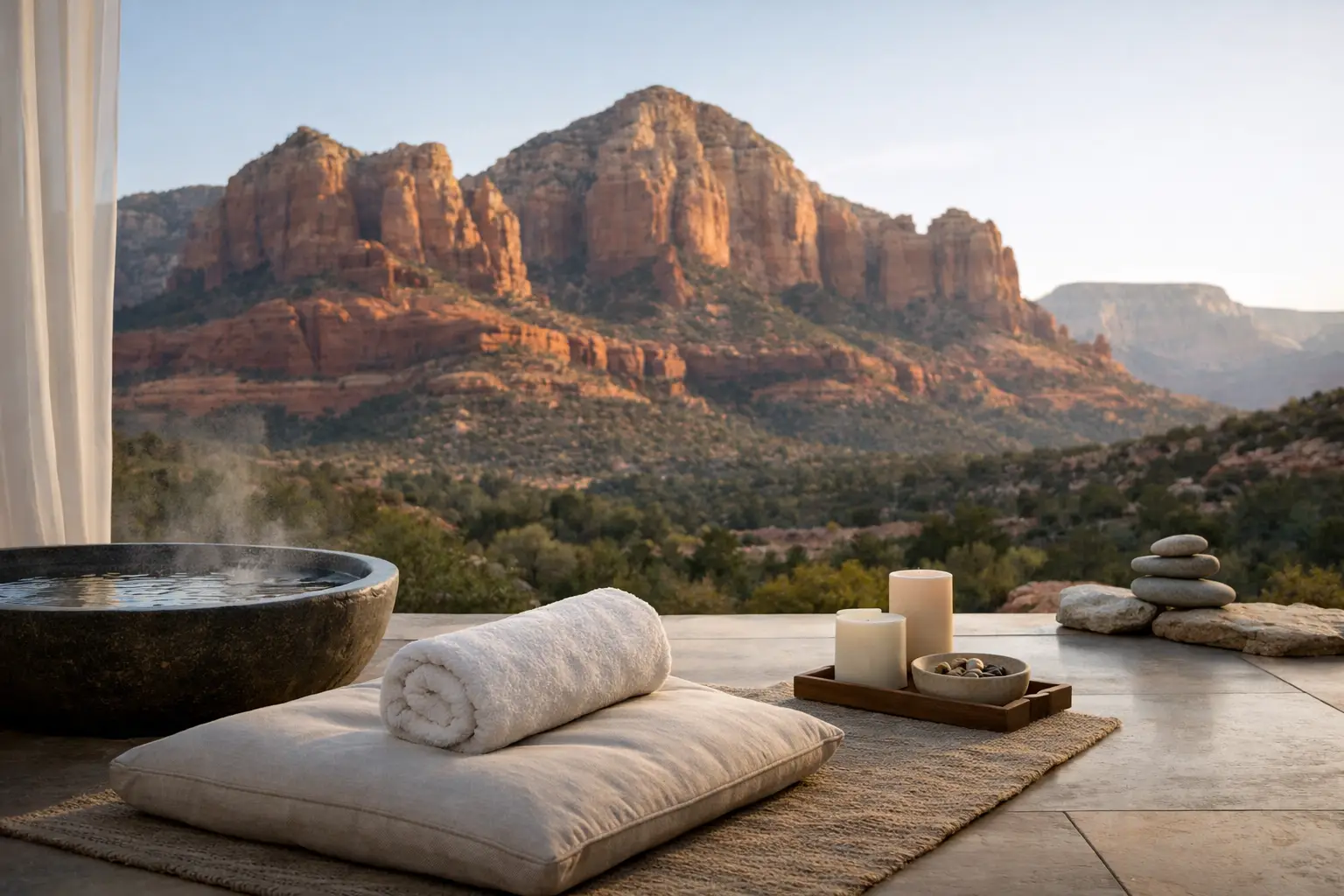

A healing journey rarely begins with a grand announcement. More often, it starts with the feeling that your usual pace is no longer giving you room to hear yourself think. If you have been asking, “what is a healing journey retreat?” the answer is less about leaving your life behind and more about stepping into a setting designed to help you return to it with greater clarity, softness, and intention.
A healing journey retreat is a purposeful stay that combines restorative surroundings, time away from familiar demands, and wellness experiences selected around what you need most. For one guest, that may mean deep rest after an overfull season. For another, it may be a private space to reconnect after loss, a demanding career chapter, a life transition, or an occasion that deserves to be marked with care. In Sedona, the red-rock landscape becomes part of that experience: a quiet, awe-inspiring presence that invites you to slow down.
What Is a Healing Journey Retreat?
Unlike a fixed-schedule wellness program that moves every guest through the same itinerary, a healing journey retreat is often personal by design. It creates room for reflection and offers supportive practices, such as massage, yoga, meditation, energy healing, sound bowl sessions, nourishing meals, time in nature, and unhurried sleep. The point is not to fill every hour with self-improvement. It is to create the conditions for restoration.
The word “healing” can mean different things to different people. It may describe emotional replenishment, a chance to release accumulated stress, renewed connection with a partner, or simply the physical relief that comes with rest and therapeutic bodywork. A retreat can support well-being, but it is not a substitute for medical, mental health, or trauma-informed clinical care when those services are needed. The most thoughtful retreats honor both the promise and the limits of wellness experiences.
A meaningful retreat also does not require you to arrive with a problem to solve. You may come because life is good and you want to protect the space to appreciate it. An anniversary, engagement, babymoon, or personal milestone can be a beautiful reason to pause, celebrate, and rediscover the essence of life together.
Why the Setting Matters
Healing is difficult to force in the same environment where you are answering messages, managing routines, and moving from one obligation to the next. A retreat creates a helpful boundary between everyday demands and the time you have reserved for yourself.
Sedona offers that boundary with unusual grace. Morning light shifts across sandstone cliffs. Trails lead directly into open desert stillness. Even a simple cup of coffee on a private courtyard can become a small ritual when the view is filled with red rock rather than traffic. For guests drawn to Sedona’s energy-vortex identity, the landscape can deepen a spiritual practice or provide a meaningful focal point for reflection. For others, its value is simpler and just as real: it is breathtakingly beautiful, quiet, and far from the usual noise.
Privacy is especially valuable when the retreat is emotional as well as restorative. Large resorts can offer impressive amenities, but they may not be the right fit for a couple seeking uninterrupted time together or a solo traveler who prefers intimacy over activity calendars. A private estate or casita setting allows the experience to unfold without the sense of being watched, rushed, or surrounded by strangers.
The Elements of a Thoughtful Healing Retreat
There is no single formula, and that is part of the appeal. Still, the most restorative healing journeys tend to balance four elements: rest, body-based care, connection, and place.
Rest means more than sleeping late, though a deep night of sleep matters. It is the freedom to leave an afternoon unscheduled, linger in a warm bath, read in a sunlit room, or sit quietly after a massage rather than rushing to the next reservation. A retreat with too much programming can become another kind of performance. A well-paced one leaves room for your own rhythm.
Body-based care brings attention back to the physical self. Massage may ease tension held in the shoulders, hips, or jaw after months of stress. Gentle yoga can help you reconnect movement with breath. Sound bowl healing and meditation may offer a meditative container for stillness. These practices do not need to be dramatic to be valuable. Often, their power is in the permission they give you to be present.
Connection may be with yourself, your partner, or a small circle of people you trust. Couples often choose a healing journey retreat when they want to step away from logistics and remember how it feels to simply enjoy one another. Private groups may gather for an intimate celebration, a women’s weekend, or a leadership retreat where honest conversation feels easier outside the office.
Finally, place matters. The room, the grounds, the views, and the ability to walk into nature all influence how settled you feel. Luxury is not only polished design or attentive service. In a healing retreat, quiet luxury is also the rare comfort of having nothing demanded of you for a while.
A Retreat Can Be Gentle or Structured
Some guests want a loosely held stay: a morning hike, a restorative massage, a sunset meditation, and plenty of open space between. Others feel more supported by a curated journey that includes daily movement, energy work, wellness sessions, and guided reflection. Neither approach is better. It depends on whether structure feels nourishing or restrictive at this point in your life.
If you are traveling with a partner, discuss expectations before you arrive. One person may imagine long hikes and active days, while the other is longing for a robe, a massage, and nowhere to be. Building a retreat around both desires can turn that difference into an opportunity for care rather than compromise.
How to Choose a Healing Journey Retreat
Begin with the question beneath the booking: what do you hope will feel different when you leave? You do not need a perfectly articulated intention. “I want to feel rested,” “we need time together,” or “I need perspective” is enough.
Then consider the level of privacy you need. A social wellness resort may suit travelers who enjoy group classes and meeting new people. A secluded property is often better for couples, solo guests, and close groups who value discretion, personal attention, and a quieter emotional atmosphere.
Look closely at how wellness is delivered. Are treatments available only in a public spa, or can they be tailored to your stay? Is there time to integrate the experience afterward? Are the practitioners and hosts attentive to personal preferences? The details shape whether the retreat feels genuinely held or merely packaged.
It is also wise to be realistic about the length of your stay. A two-night escape can offer a lovely reset, especially when travel time is minimal. Three or four nights usually allow for a slower arrival, a fuller wellness experience, and a final day that does not feel rushed. Longer stays can be especially meaningful during major transitions or when a couple wants to pair restoration with adventure on Sedona’s trails.
Creating a Healing Journey in Sedona
At Eagle Dancer, a healing journey can be shaped around the privacy of a gated estate, five intimate casitas, guest-exclusive wellness care, and direct access to Sedona’s red-rock scenery. The experience may be as simple as unplugging in an adobe-inspired sanctuary with a couples massage and an evening beneath the stars, or as considered as a personalized rhythm of yoga, meditation, sound healing, and time on the trails.
The most memorable moments are often the least scheduled. The pause after a healing session. The walk back from the rocks when the desert begins to cool. The conversation that finally has room to unfold because neither of you needs to be anywhere else. These are not small details. They are often where renewal quietly takes root.
A healing journey retreat is not about returning home as an entirely different person. It is about leaving with a little more space inside yourself, and with a few rituals worth carrying back into ordinary life.