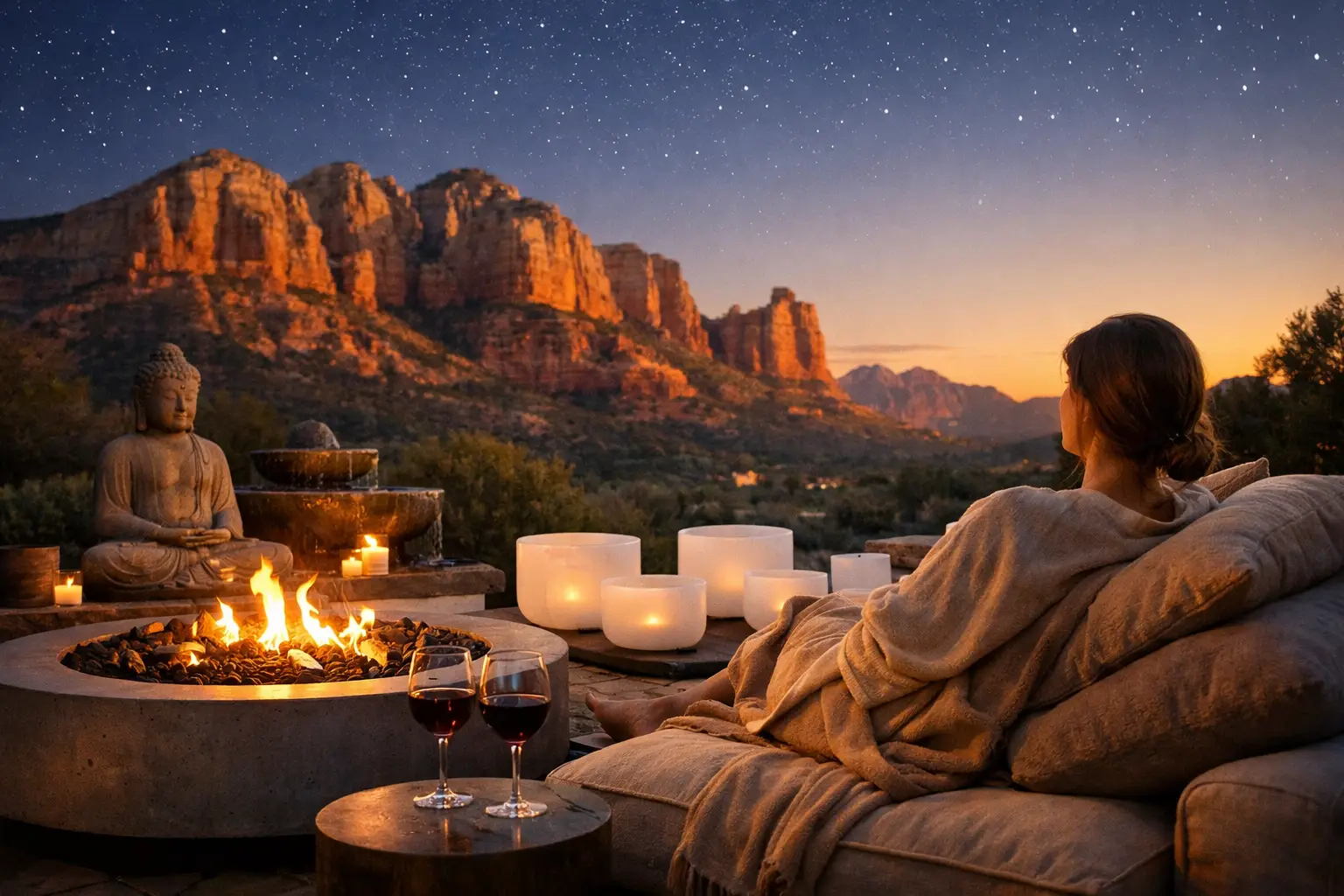

The first note can feel less like a sound and more like a change in the room. A crystal or metal bowl is gently played, its resonance spreading through the quiet until the red rocks beyond the window seem to hold still with you. Sound bowl healing Sedona experiences invite a different pace: no itinerary to conquer, no need to explain yourself, and no pressure to emerge feeling anything in particular.
For travelers who arrive carrying the pace of Phoenix, San Francisco, or New York, this kind of stillness can be one of the most memorable parts of a Sedona escape. It creates space after a long hike, before an intimate celebration, or during a private wellness retreat when rest deserves as much intention as adventure.
What Sound Bowl Healing Is Meant to Feel Like
Sound bowl healing is a restorative practice in which a practitioner plays singing bowls, often alongside other gentle instruments, to create sustained tones and vibrations. Guests typically recline comfortably, close their eyes, and allow the sound to rise and fade without trying to do anything. The session may include guided breathwork, meditation, or an energy-focused intention, depending on the practitioner and the experience you choose.
The appeal is not that a bowl can solve every concern. Rather, the layered tones can offer a clear focal point for attention. When the mind has something simple and beautiful to follow, it may be easier to release the mental loops that often accompany travel, work, planning, and caregiving.
People describe the experience differently. One guest may feel deeply relaxed and sleepy. Another may feel emotionally tender, quietly energized, or unusually present. Some simply enjoy the sound and the opportunity to lie down in a peaceful setting. All are valid responses. Sound healing is not a medical treatment or a substitute for professional physical or mental health care, but it can be a meaningful complement to a well-considered restorative stay.
Why Sedona Changes the Experience
A sound session can be held anywhere, but place matters. Sedona brings a rare combination of expansive views, desert quiet, clear light, and a long-held reputation as a destination for spiritual reflection. For those drawn to the region’s vortex energy, the landscape can make a private practice feel especially personal. For those who simply love the desert, the stillness is reason enough.
The most intimate sessions are not performed against the distraction of a busy resort schedule. They are woven into an unhurried day: coffee in a private courtyard, a morning trail walk beneath cathedral-like rock formations, a nourishing meal, then time set aside to unplug + relax. The natural rhythm of the landscape does much of the work. Sound becomes one more way to meet it.
At Eagle Dancer, guest-exclusive wellness experiences are designed around that sense of privacy. Rather than moving through a crowded spa, guests can settle into the calm of a secluded estate setting, where red-rock scenery and thoughtful hospitality remain part of the experience from beginning to end.
Sound Bowl Healing Sedona: What to Expect
Before a session begins, a skilled practitioner will often ask about your comfort, intentions, and any sensitivities. You do not need to arrive with a profound question or a spiritual vocabulary. “I would like to rest” is a complete intention.
You will generally be invited to lie on a mat or comfortable surface, perhaps with a blanket, bolster, or eye pillow. Wear soft clothing and choose layers, since the body can cool as it settles. The practitioner may begin with a few moments of silence or a simple invitation to notice your breath before introducing the first tones.
The bowls may be played around the room or, in some formats, near different areas of the body. The sound is not meant to be loud or startling, though certain notes can feel surprisingly powerful in a quiet space. You may notice the resonance in your chest, jaw, hands, or simply in the air around you. There is no correct way to listen.
As the session closes, give yourself a few minutes before returning to conversation, driving, or checking your phone. Drink water, step outside, and notice how the desert light feels. A rushed transition can undo some of the gentleness you made time to receive.
The right time to schedule a session
Timing depends on the intention behind your stay. A late-afternoon session can help you ease from a day of hiking into a slow evening, especially before a private dinner or a quiet night in your casita. Morning sessions can set a grounded tone for a day of meditation, yoga, or reflection.
For a romantic getaway, consider scheduling sound healing early in the stay. It gives couples a chance to arrive together before the details of a proposal, elopement, anniversary, or vow renewal take center stage. For solo guests, it may be most welcome on the first full day, once the nervous system has had a chance to leave travel behind.
If you are planning massage and sound healing during the same visit, it is often wise to leave breathing room between them. Some guests enjoy the pairing on the same day; others prefer to let each practice stand on its own. Your energy, travel fatigue, and comfort with quiet introspection should guide the choice.
How to Prepare Without Overthinking It
A meaningful session asks very little of you. Eat lightly beforehand if possible, hydrate well, and avoid planning an immediate high-energy activity afterward. If you are sensitive to sound, prone to migraines, managing tinnitus, pregnant, or living with a condition that affects how you experience vibration or stillness, mention it when arranging your session. A qualified practitioner can discuss adjustments, volume, positioning, and whether the experience is appropriate for you.
It also helps to release the expectation of a dramatic breakthrough. Social media has made wellness look performative at times, as though every practice must produce tears, visions, or a perfect revelation. In truth, a session may offer something quieter: a relaxed jaw, a longer exhale, an afternoon nap, or the welcome feeling of being fully present with the person beside you.
For couples, there is a particular intimacy in sharing a practice without needing to speak. You may enter the session with separate thoughts and leave with a shared softness. That can be a beautiful counterpoint to the highly visible moments of a celebration, from engagement photos to wedding toasts. For executive retreat groups, a private sound session can create a more spacious beginning to strategic conversations, provided participants understand that it is an invitation rather than an obligation.
Choosing a Private Experience Over a Public Sound Bath
Public sound baths can be wonderful, especially for travelers looking for a casual introduction. They are often social, accessible, and scheduled at set times. Yet a private session offers a different kind of luxury: the ability to shape the setting, pace, and level of guidance around your needs.
That distinction matters when you are celebrating something personal or seeking genuine recovery. A honeymoon couple may want the quiet of a session without other guests nearby. A babymoon traveler may appreciate greater comfort and individualized positioning. A small group chartering a private estate may prefer an experience that supports its own rhythm rather than a public calendar.
Privacy also gives you room to be honest. If you need silence, more explanation, a gentler volume, or simply a few extra moments at the end, the experience can meet you there. The most luxurious wellness is not always more elaborate. Often, it is being cared for without having to ask twice.
Let Rest Be Part of the Itinerary
Sedona rewards those who make room for both movement and stillness. Take the sunrise hike. Stay for the celebratory dinner. Let the red rocks remind you to look up. Then reserve a portion of the day for the kind of rest that does not need to be earned.
A sound bowl session will not ask you to become someone new. It offers a quieter invitation: to return to your own breath, your own body, and the sacred connection of being fully here. Leave a little space around it, and let the notes fade slowly into the landscape.