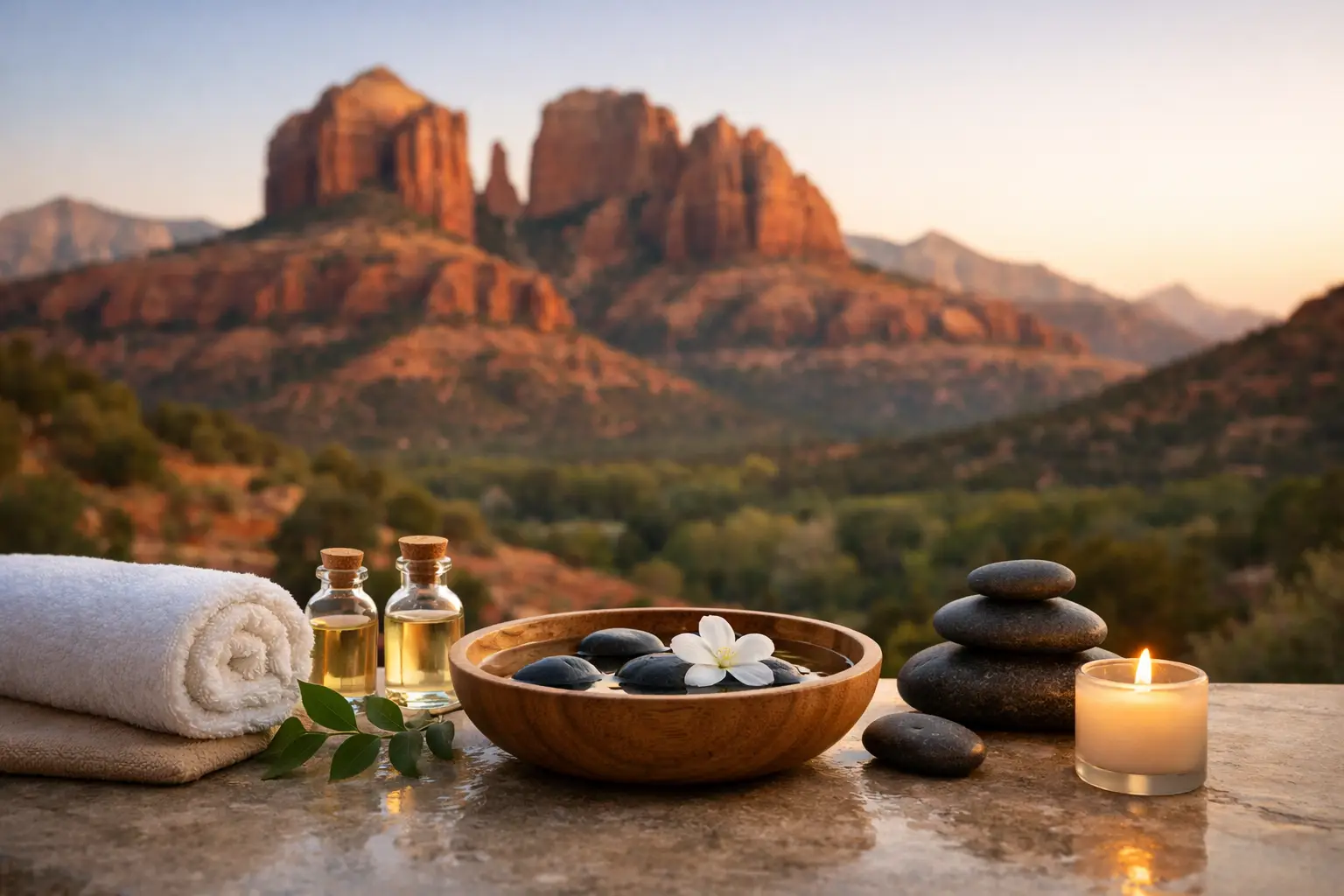

The last stretch of a Sedona trail can feel almost ceremonial: warm sandstone beneath your boots, juniper on the breeze, red cliffs glowing in the late-afternoon sun. Then you return to your casita and discover that your calves have a different opinion. Knowing how to recover after hiking is what lets a beautiful day in the red rocks become part of your renewal rather than the reason tomorrow’s plans feel out of reach.
Sedona asks for presence. Its dry climate, strong sun, elevation, and dramatic terrain can draw more from the body than a familiar walk at home. A thoughtful recovery ritual honors that effort, leaving room for both physical ease and the quieter restoration that brought you here.
How to Recover After Hiking Starts on the Trail
Recovery is easier when you do not arrive back depleted. On longer or exposed trails, pause before you feel exhausted. Find a sliver of shade, slow your breathing, and sip water steadily rather than waiting until you are intensely thirsty. In Arizona’s dry air, sweat can evaporate so quickly that it is easy to miss how much fluid you are losing.
Bring more water than you think you will need, particularly from late spring through early fall. For hikes lasting more than an hour or involving sustained climbing, an electrolyte drink or electrolyte-rich snack can be useful as well. Water remains the foundation, while electrolytes help replace sodium lost through sweat. The right balance depends on the day, your exertion, and your personal health needs, so there is no prize for forcing down excessive amounts of either.
Give Your Body a Gentle Landing
When you reach your accommodation, resist the instinct to immediately collapse in the air conditioning. First, take five unhurried minutes to help your system shift gears. Remove your boots, loosen your laces, and walk slowly around your room or courtyard. This small transition encourages circulation after a long descent or climb.
If your skin is hot or flushed, cool down gradually with a lukewarm shower, a shaded seat outdoors, or a cool cloth at the back of the neck. An icy plunge may feel tempting, but it is not necessary for most recreational hikers and can feel jarring when you are already dehydrated. Gentle cooling, shade, and fluids are usually the more restorative choice.
Rehydrate With Intention, Then Eat Well
A large glass of water is a lovely beginning, not the whole ritual. Continue sipping throughout the afternoon and evening, especially if your hike left you with a headache, dry mouth, or unusually dark urine. Those can be signs that you need more fluids, although severe headache, confusion, fainting, vomiting, or worsening symptoms deserve prompt medical attention rather than a wait-and-see approach.
Pair hydration with a satisfying meal. Hiking uses stored carbohydrate, stresses muscle tissue, and often leaves people hungrier than expected once they finally slow down. Within a couple of hours, choose food that feels nourishing and substantial: colorful produce, a source of protein, healthful fats, and carbohydrates such as potatoes, rice, whole grains, or fruit.
A composed dinner might include grilled fish or chicken with vegetables and quinoa, while a lighter appetite may be better served by yogurt, fruit, nuts, and toast. The exact meal matters less than eating enough to replenish. A cocktail beside a sunset view can certainly be part of a romantic getaway, but alternate it with water. Alcohol can intensify dehydration and disrupt the deep sleep your muscles need.
Release Tightness Without Overdoing It
Post-hike stretching should feel like an invitation, not a test of flexibility. Focus on the areas that typically work hardest on Sedona terrain: calves, hip flexors, glutes, hamstrings, feet, and the muscles around the ankles. Hold gentle stretches while breathing slowly, and avoid bouncing or pushing into sharp discomfort.
A few minutes of easy mobility often provides more relief than an ambitious 30-minute routine. Circle your ankles, roll the soles of your feet over a ball or chilled water bottle, and lie down with your legs supported on pillows. If you have been carrying a daypack, open the chest with a soft doorway stretch and give your shoulders a little attention, too.
The same principle applies to massage. A skilled, restorative massage can be deeply welcome after a hike, particularly when it emphasizes circulation and relaxation. Yet very intense deep-tissue work on already sore muscles may leave you feeling more tender the next morning. Share what you did on the trail with your practitioner and ask for a session tailored to how your body feels that day.
At Eagle Dancer, guests can extend the calm of the landscape with private wellness experiences designed around their stay, from soothing massage to yoga, meditation, sound bowl healing, and energy work. For some travelers, a quiet treatment room becomes the ideal bridge between an active day outdoors and a slow, restorative evening.
Let Sleep Complete the Recovery
Sleep is one of the most effective recovery tools available, and it asks very little beyond giving yourself permission to rest. During deeper stages of sleep, the body supports tissue repair and regulates many of the systems affected by exercise, travel, heat, and stress.
Create an evening that makes rest easy. Take a warm shower, put away the hiking clothes, dim the lights, and let the last hour of the day become quieter than the first. A private courtyard, soft adobe interiors, and the stillness after sunset can make this feel less like a wellness assignment and more like the reason you chose Sedona.
If your legs feel restless at bedtime, try elevating them briefly or placing a pillow between your knees if you sleep on your side. A short meditation or slow breathing practice can also settle the nervous system after a day of navigation, weather, and exertion. You do not need to force a profound experience. Simply letting your attention return to your breath is enough.
Know When to Rest Instead of Rallying
A little stiffness the following morning is normal, especially after steep terrain or a hike longer than your usual routine. Gentle walking, a relaxed yoga session, or an easy scenic drive can help you feel better than remaining completely still. But recovery is not always about doing more movement.
Take a true rest day if your fatigue feels unusually heavy, your joints are painful rather than merely sore, or you notice blisters, swelling, dizziness, or symptoms of heat illness. Sedona will still be beautiful from a shaded terrace, beside a spa treatment table, or during a quiet morning with coffee and red-rock views. There is no need to collect miles at the expense of your trip.
This is especially relevant for guests arriving from sea level, travelers who have not hiked recently, and anyone balancing a hike with a wedding weekend, anniversary celebration, or full retreat itinerary. The most memorable itineraries leave space for spontaneity. A day that begins as a recovery day may become the one where you finally notice the play of light across the rocks, share an unhurried breakfast, or simply unplug + relax.
Turn Recovery Into Part of the Experience
Rather than treating recovery as the practical chore after the adventure, make it a cherished part of the day. Plan your hike with a gentle afternoon afterward. Reserve time for a nourishing meal, a warm soak, or a restorative treatment. Keep the next morning open enough that you can wake naturally instead of rushing toward another commitment.
This rhythm is particularly lovely for couples. One person may be ready for another summit while the other wants a slower morning, and both desires can belong in the same getaway. Choose a shorter trail, linger over breakfast, or trade an additional hike for a sound healing session and an evening beneath Sedona’s wide, star-filled sky.
The red rocks offer plenty of reasons to move. Give yourself an equally beautiful reason to be still afterward. When your body is cared for with water, nourishment, gentle touch, and unhurried rest, the landscape has more room to settle into you.