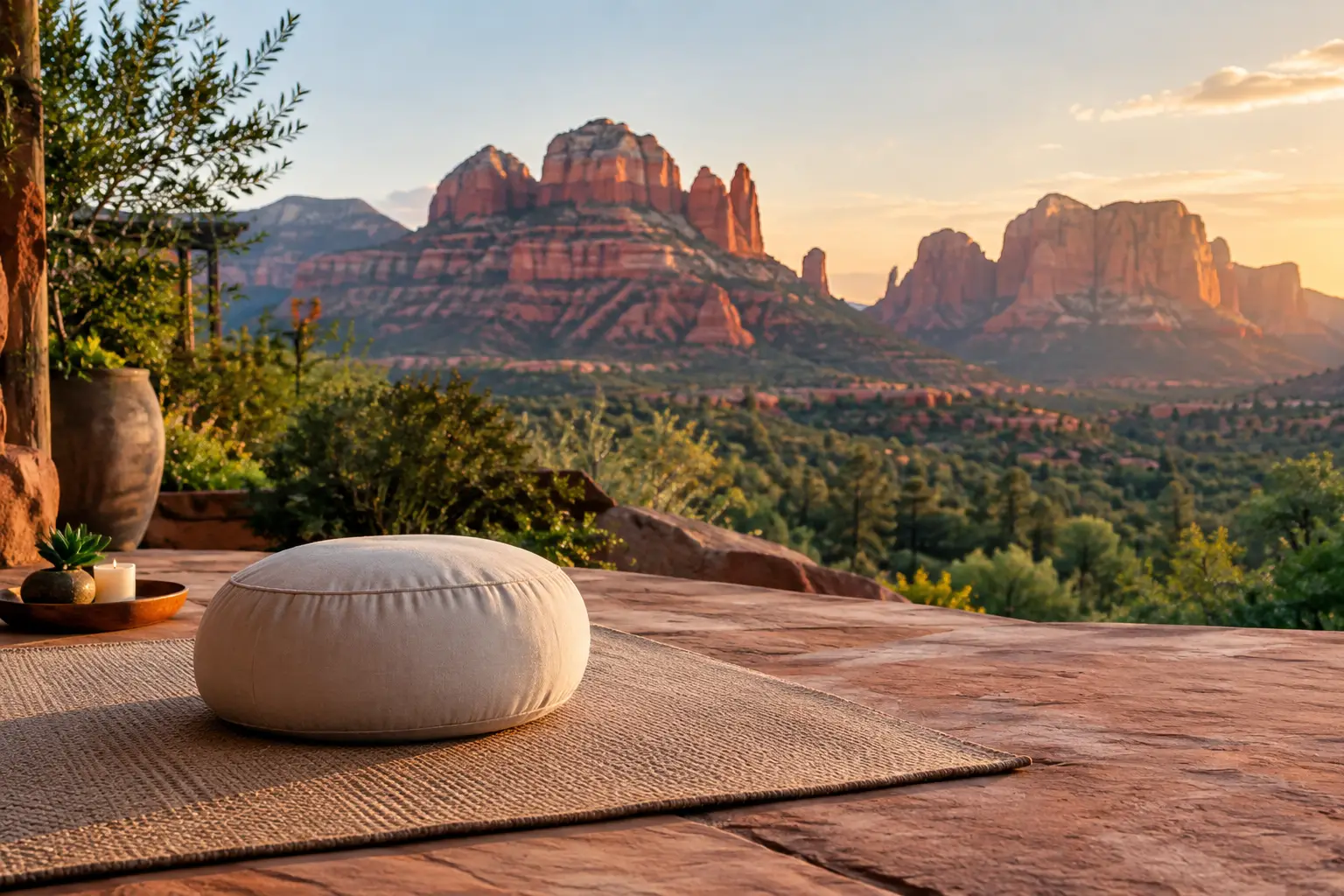

Meditation retreats are often imagined as silent, highly structured weeks spent far from comfort. For many travelers, the most meaningful version is gentler: a private place to exhale, a landscape that invites perspective, and enough thoughtful care to let the mind finally settle. In Sedona, red-rock horizons, desert light, and the unhurried rhythm of the trails create a natural setting for that return to self.
A restorative retreat does not ask you to become someone else by Monday morning. It creates the conditions to hear yourself again. That may mean a morning meditation before hiking, a healing massage after an afternoon outdoors, or simply lingering in a private courtyard while the day softens into evening.
What Meditation Retreats Can Make Possible
The real value of a meditation retreat is not constant activity. It is protected space. At home, even a beautiful wellness routine competes with meetings, notifications, errands, and the subtle pressure to be productive. Travel can interrupt those patterns, especially when the setting feels intentionally removed from crowds and schedules.
Meditation becomes easier when the body feels safe and cared for. A comfortable bed, nourishing meals, warm water, quiet surroundings, and unstructured time are not indulgences separate from the practice. They are often what allow the nervous system to ease out of vigilance. From that softer place, stillness becomes less like a task and more like a relief.
For couples, shared meditation can also create a rare kind of intimacy. There is nothing performative about sitting quietly beside someone you love, then walking beneath the red rocks or sharing a slow dinner afterward. It can make room for the conversations that daily life keeps postponing. For solo guests, the same spaciousness can support reflection, recovery, and a renewed sense of direction.
Sedona adds another dimension. Its striking formations are more than scenic backdrop. Many visitors are drawn to the region’s reputation for energy vortices and describe feeling especially grounded, inspired, or clear here. Whether you relate to that through spiritual practice, time in nature, or simple awe, the landscape has a way of bringing attention back to the present.
Why Sedona Is a Natural Setting for Meditation Retreats
A city retreat can be useful, particularly when convenience is the priority. Sedona offers something different: the chance to pair inner quiet with an immersive natural environment. Sunrise touches the sandstone in shades of rose and amber. Juniper and desert air scent the trail. At night, the sky opens wide enough to make a busy mind feel a little less central.
That sense of scale matters. Meditation is not always about emptying the mind. More often, it is the practice of noticing thoughts without being carried away by each one. A morning walk among the red rocks can teach the same lesson. The terrain asks for presence – attention to footing, breath, light, and the changing shape of the path.
The best retreat pace leaves room for both solitude and experience. An ambitious hiking itinerary may be energizing for one guest and exhausting for another. A full day of spa treatments can feel deeply restorative, yet some travelers need movement before they can truly rest. The most personal retreats allow you to choose what your body and spirit are asking for rather than following a rigid formula.
Choose the Level of Structure You Need
Before booking, consider whether you want teaching, treatment, privacy, or a blend of all three. Traditional group retreats usually follow a defined schedule of guided sits, workshops, shared meals, and sometimes periods of silence. They can be powerful for guests who want instruction, community, and accountability.
A private wellness stay offers another kind of freedom. Rather than moving through a fixed agenda with strangers, you can build your days around your own intentions. You might begin with private yoga, book a sound bowl healing session in the afternoon, and reserve the evening for a quiet meditation under the stars. This approach is especially appealing for couples, celebratory trips, and travelers who value discretion.
Neither format is inherently better. If you are new to meditation and want daily guidance, a structured program may feel supportive. If your life is already full of expectations and appointments, a more spacious retreat may be the deeper luxury. The question is not how much programming you can fit in. It is how you want to feel when you leave.
Let Your Intention Shape the Experience
A clear intention keeps a retreat from becoming another packed vacation. It does not need to be grand. Perhaps you want to sleep deeply after a demanding season at work. Maybe you are marking an anniversary and want time to reconnect without distractions. You may be preparing for a new chapter, recovering from burnout, or simply craving silence that does not feel lonely.
Once you know the feeling you are seeking, choose experiences that support it. A guest longing for physical release might combine gentle yoga, massage, and a slow trail walk. Someone seeking emotional clarity may prefer meditation, energy healing, journaling, and early nights. Couples may choose a shared sound healing session, a private dinner, and enough unscheduled time to let connection unfold naturally.
The Quiet Luxury of a Private Retreat
Luxury in a meditation retreat is not necessarily about more. It is about fewer interruptions, more care, and surroundings that make restoration feel possible. Privacy matters when you are trying to let go of the roles you carry at home. A secluded casita, soft adobe interiors, and a private outdoor space can feel more replenishing than a grand lobby or a crowded spa calendar.
At Eagle Dancer, the intimacy of a five-casita private estate allows wellness to feel personal rather than programmed. Guests can retreat into their own peaceful accommodations while remaining close to Sedona’s trails, red-rock views, and guest-exclusive healing experiences. It is a setting designed for unplug + relax moments, whether the stay is a romantic escape, a solo reset, or a small private gathering.
Thoughtful service also changes the texture of a retreat. The goal is not to fill every moment for you. It is to remove the small frictions that pull you out of presence. When a treatment is arranged with care, when your space feels genuinely private, and when the day can unfold at your pace, attention naturally returns to what matters.
How to Prepare Without Overplanning
The most restorative retreats begin before arrival. Protect the edges of the trip if you can. Avoid scheduling a demanding event immediately before your departure, and give yourself a little room after returning home rather than racing straight into obligations. Even a single quieter evening on either side can help the benefits stay with you.
Bring clothing that encourages ease: layers for cool desert mornings and evenings, supportive shoes for the trails, and something comfortable enough for meditation or yoga. Leave room in your suitcase and your schedule. You do not need to bring a perfect practice with you. Ten honest minutes of sitting quietly can be more meaningful than an hour spent judging your own thoughts.
It can also help to loosen your relationship with your phone. You may not want a total digital detox, especially if work or family needs access to you. Consider creating a simple boundary instead: no phone before your first cup of coffee, no scrolling on the trail, or one designated time to check messages. Small limits can make a surprising difference.
Carry the Stillness Home Gently
The purpose of a retreat is not to preserve a flawless feeling forever. Life will resume, and a busy morning does not erase what you experienced beneath the Sedona sky. Rather than demanding that you maintain retreat-level calm, choose one small ritual to carry forward: a few breaths before opening your laptop, a quiet walk after dinner, or five minutes of meditation before sleep.
Let the memory of spaciousness become a reminder. You do not have to earn rest by reaching exhaustion first. Sometimes the most meaningful change begins when you give yourself permission to pause.