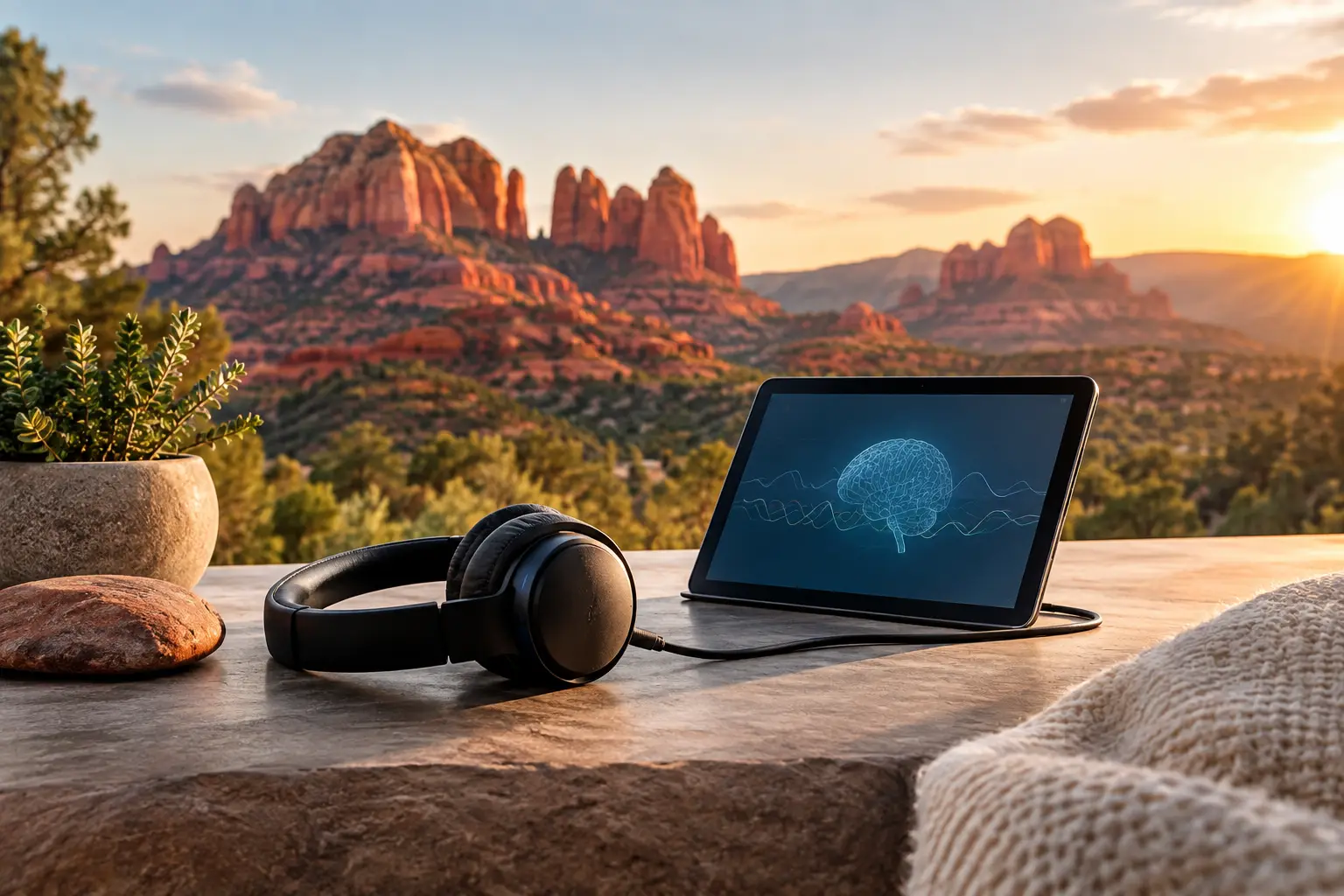

The stillness of Sedona can make patterns easier to notice: the mind that keeps reviewing a difficult conversation, the body that remains alert long after the day has ended, the fatigue that sleep alone has not softened. For travelers considering neurofeedback in Sedona, the appeal is often larger than a single appointment. It is the chance to step out of familiar demands and create room for focused, supported restoration.
Neurofeedback is not a spa ritual, and it should not be treated as a promise of instant transformation. It is a training-based wellness approach that uses real-time information from brain activity to encourage different patterns of regulation. For some people, it can be a meaningful complement to a broader plan for stress, sleep, focus, or emotional balance. For others, a quieter wellness experience such as massage, meditation, movement, or time in nature may be the more natural starting place.
The right choice depends on your goals, your health history, the qualifications of the provider, and the kind of care you need.
What Neurofeedback Is Designed to Do
During a neurofeedback session, a trained practitioner typically places small sensors on the scalp to measure electrical activity in the brain. The sensors do not send electricity into the brain. They receive information, which a computer translates into feedback – often through sound, images, or a video that changes in response to certain activity patterns.
The premise is straightforward: when the brain receives immediate feedback, it may gradually learn to spend more time in patterns associated with steadiness and less time in patterns associated with dysregulation. Sessions are generally noninvasive and often feel surprisingly quiet. A guest may sit comfortably, watch a screen, listen to audio, and allow the process to unfold without needing to perform or explain every thought.
That said, neurofeedback is not one uniform experience. Protocols vary. Some providers offer quantitative EEG, sometimes called brain mapping, before recommending a training plan. Others use standardized approaches based on the concerns discussed during intake. The equipment, clinical training, number of sessions suggested, and degree of oversight can all differ.
Research into neurofeedback is still evolving, with results varying by condition and protocol. It is best viewed with curiosity and discernment rather than as a cure-all. A responsible provider will speak plainly about potential benefits, uncertainty, cost, and when medical or mental-health care should remain the priority.
Why Seek Neurofeedback in Sedona?
Sedona offers something many people cannot access in their ordinary routines: spaciousness. Between red-rock trails, wide desert skies, and the hush that settles over the landscape at dusk, the setting invites a different pace. For guests who feel continually overstimulated, that change of pace can be as valuable as the session itself.
A visit can also support intentionality. At home, it is easy to schedule a wellness appointment between meetings, errands, and family obligations, then return immediately to the same pressures. In Sedona, there is an opportunity to give the experience a gentler frame. You might reserve the afternoon for rest, take an unhurried walk, journal beneath a cottonwood tree, or simply sit in a private courtyard with nowhere else to be.
For those drawn to Sedona’s energy-vortex identity, neurofeedback may feel aligned with a larger desire for inner clarity. It is worth holding the distinction with care. The spiritual resonance of the landscape is personal and experiential, while neurofeedback is a technology-assisted practice. They need not compete. One can offer a meaningful setting for reflection; the other may offer structured feedback within a provider’s scope of practice.
Who May Consider Neurofeedback
People arrive with different intentions. One guest may be seeking greater ease around persistent stress. Another may be curious about support for attention, sleep, or performance during a demanding season of life. Couples sometimes plan restorative getaways when work, caregiving, or a major life transition has left little room for connection. Executives may seek a more centered state before returning to consequential decisions.
Neurofeedback may be worth discussing with a qualified provider if you are looking for a noninvasive, skills-oriented approach to self-regulation and are comfortable with a process that often unfolds over time. A single session can introduce you to the experience, but it may not tell you much about longer-term results. Many programs involve a series of appointments, particularly when they are designed around specific goals.
It may not be the right fit if what you need is urgent medical or psychiatric support. Anyone experiencing severe symptoms, a mental-health crisis, sudden neurological changes, or concerns about medication should contact an appropriately licensed medical or mental-health professional. Neurofeedback should never replace emergency care, diagnosis, or a treatment plan developed with your clinician.
Questions to Ask Before You Book
The quality of the relationship with the practitioner matters. Before making an appointment, ask about the provider’s professional license or certification, their experience with your concerns, and the assessment they use to guide training. Ask whether they collaborate with physicians or therapists when appropriate, and what they would do if you felt uncomfortable or noticed unwanted changes between sessions.
It is also wise to ask practical questions. How long is the initial consultation? Is brain mapping included, optional, or not offered? What is the total anticipated investment if multiple sessions are recommended? Are there cancellation policies that could affect a short Sedona stay? A clear answer is a sign of respect for both your time and your wellbeing.
Be candid about your health history, medications, sleep patterns, previous head injuries, and current mental-health support. The goal is not to disqualify yourself. It is to help the practitioner make thoughtful recommendations and recognize when another form of care may be more appropriate.
Creating a Restorative Rhythm Around Your Session
A wellness-focused trip does not need to become a tightly managed self-improvement project. The desert tends to reward a more spacious approach. If you schedule neurofeedback during your stay, leave room around it. Avoid packing the same day with a strenuous hike, a packed social agenda, and late-night cocktails simply because Sedona offers so much to experience.
Instead, create a rhythm that lets you notice how you feel. Begin with water, nourishing food, and an easy morning. Choose a trail that invites presence rather than competition. After your appointment, consider a slow meal, a quiet hour away from screens, or a restorative bodywork session on another day. Gentle yoga, meditation, and sound healing can also complement an intention of settling the nervous system, provided you do not treat any single modality as a guaranteed answer.
At Eagle Dancer, the intimacy of a private estate creates the kind of quiet luxury that can make this rhythm feel possible. Returning to an adobe casita, soft textures, and red-rock views after a day of personal care offers a rare permission to unplug + relax without surrendering comfort or beauty.
For couples, it can help to leave at least one portion of the trip unscheduled. A shared sunset, a lingering breakfast, or an evening beneath the stars may do more for connection than another reservation. For solo guests, solitude can be restorative, but so can choosing one meaningful conversation with a trusted practitioner or companion.
Let Curiosity Lead, Not Pressure
The most useful question is not whether neurofeedback is the perfect answer. It is whether it belongs in the kind of support you are seeking right now. Choose a qualified provider, keep your expectations grounded, and allow enough time to listen to your own response.
Sedona need not demand that you return home as a different person. Sometimes the deeper gift is simpler: a calmer inner landscape, a clearer sense of what deserves your attention, and the memory of having given yourself space to rediscover the essence of life.