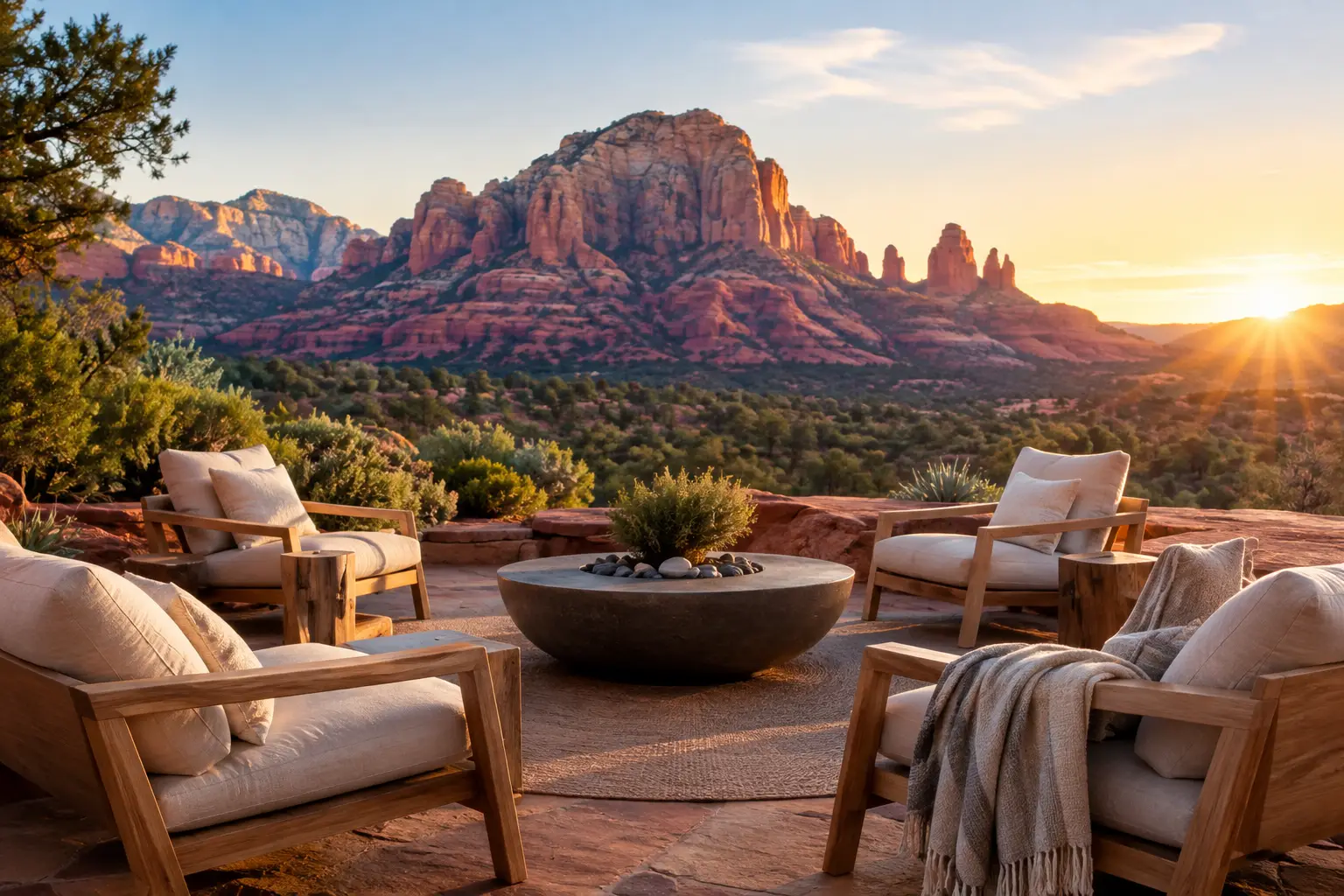

A meaningful team retreat should change the pace before it changes the agenda. In Sedona, morning light moves across red-rock walls, trails begin close to your door, and the landscape makes a persuasive case for putting the phones down. A team retreat in Sedona offers more than a beautiful setting for presentations. It creates the conditions for clear thinking, candid conversation, and the kind of restoration that busy leaders rarely make time to seek.
For executive teams, creative partners, and private leadership groups, the most valuable retreat is not necessarily the one with the fullest schedule. It is the one that gives every person room to arrive, contribute, and return home with a renewed sense of direction.
Why Sedona Changes the Retreat Dynamic
There is a practical reason Sedona works so well for a leadership gathering: it removes a team from its usual patterns without demanding an exhausting travel experience. For groups arriving from Phoenix, Northern California, New York, and beyond, Sedona feels distinct from the boardroom the moment the red rocks come into view.
The setting matters because teams carry their habits with them. In a conventional conference hotel, it is easy to recreate the same hurried meeting rhythm, complete with fluorescent lighting, overlapping noise, and a calendar packed too tightly to think. Sedona invites a different cadence. A sunrise walk can become the beginning of a strategic conversation. An afternoon massage can make space for a leader to release tension they had mistaken for urgency. A quiet courtyard can feel more useful than another hour in a meeting room.
Sedona’s spiritual reputation may resonate deeply with some groups and be less central for others. That is perfectly fine. A retreat does not need to follow a prescribed wellness path to benefit from the region’s sense of calm, scale, and natural beauty. The important choice is to build a gathering that feels authentic to the people attending.
Begin With the Outcome, Not the Itinerary
Before selecting activities, decide what your team needs most. Is the purpose to set a new company vision, work through a difficult transition, reconnect after a demanding season, or recognize a leadership group that has carried significant responsibility? Each intention calls for a different balance of focused work and unstructured time.
A strategic planning retreat may need a few carefully protected work sessions, with enough space between them for reflection. A culture-focused gathering may benefit from shared meals, guided conversations, and experiences that allow colleagues to see one another outside familiar roles. A founder-led group preparing for a major decision might need privacy above all else, along with an environment that supports discretion and thoughtful dialogue.
Resist the instinct to fill every hour. The moments between formal sessions are often where trust grows: a conversation on a trail, a lingering breakfast, or a quiet cup of coffee before the group gathers. When the agenda is too dense, the destination becomes a backdrop rather than a partner in the experience.
Make room for both clarity and restoration
The strongest retreat design alternates between purpose and pause. Consider a morning devoted to the work that requires everyone’s full attention, followed by time for hiking, spa care, or quiet reflection. Reconvene later for a relaxed dinner and a more open conversation about what emerged.
This rhythm honors a reality many leadership teams overlook: people make better decisions when their nervous systems are not operating at full strain. Wellness is not a decorative addition to a corporate offsite. When offered with care and without pressure, it can support presence, patience, and a greater capacity to listen.
Choose Privacy Over Convention Space
The right accommodation can determine whether a retreat feels intimate or impersonal. Large resorts can be convenient for big conferences, but smaller executive groups often gain more from a private estate charter. Instead of navigating public lobbies and sharing common spaces with other travelers, your group can settle into a setting that belongs entirely to them for the duration of the stay.
Private accommodations create a more natural flow between work and rest. Colleagues can gather for a planning session, step outside for red-rock views, and return later for a private dinner without the logistical friction of changing venues. Individual casitas also give guests a genuine retreat at the end of the day, rather than another identical hotel room.
At Eagle Dancer, five private casitas on a gated six-acre estate offer this rare combination of togetherness and personal space. The atmosphere is quiet luxury rather than corporate formality: adobe character, soft interiors, private courtyards, and direct access to Sedona’s dramatic landscape. For a group that values confidentiality, tailored hospitality, and a setting with emotional resonance, an estate charter can be a far more meaningful choice than a standard offsite package.
Build a Team Retreat in Sedona Around Shared Experience
A polished itinerary does not require constant programming. It requires a few intentional experiences that support the retreat’s purpose and feel appropriate for the group. Sedona offers an especially graceful balance of outdoor exploration, restorative care, and unhurried connection.
A guided hike may be ideal for a team that has spent months behind screens. Choose a route that matches the group’s fitness level and leave room to stop, take in the scenery, and let conversation unfold. For some teams, an early walk among the red rocks is a better opening than an icebreaker ever could be.
Guest-exclusive wellness offerings can provide a gentler counterpoint to goal setting and discussion. Massage, yoga, meditation, sound bowl healing, and energy-focused experiences can be offered as invitations, never obligations. Some guests will welcome a full wellness afternoon; others may prefer private reading time, a solo trail walk, or an afternoon nap. Respecting those preferences is part of thoughtful hosting.
Meals deserve the same care. A private dinner is not simply a meal between meetings. It can be the moment a team celebrates progress, thanks a departing leader, or speaks honestly about the road ahead. Favor a pace that allows people to remain at the table. The conversation after dinner may reveal more than the presentation before it.
Plan for Different Personalities and Energy Levels
Not every team member recharges in the same way. The extrovert may want a group hike and a long, laughter-filled dinner. The quieter colleague may need an hour alone before joining the evening. A successful retreat gives both people permission to participate fully without insisting they participate identically.
This is especially relevant when wellness is part of the experience. Present choices clearly, provide easy opt-in opportunities, and avoid framing rest as a reward only for those who have completed every group activity. The goal is not forced bonding. It is a more grounded form of connection that leaves people feeling seen rather than managed.
Accessibility and physical comfort also belong in the planning conversation. Consider mobility needs, dietary preferences, travel fatigue, and the realities of Arizona weather. Sedona can be beautifully warm by day and cool after sunset, while certain trails are better suited to confident hikers than casual walkers. A bespoke itinerary has room for alternatives, so no one feels left behind.
Keep the Work Sessions Elegant and Focused
A retreat setting can inspire expansive ideas, but it still needs structure. Establish what must be decided, who will guide each conversation, and how the team will capture commitments before everyone returns home. Limit presentations to what is necessary. If someone can read a briefing before arrival, do not spend precious group time reading slides aloud.
For sensitive topics, create agreements at the start: confidentiality, curiosity, directness, and respect for different points of view. Leaders set the tone here. When they are willing to be candid about uncertainty, trade-offs, or lessons learned, the retreat becomes more than a reward trip. It becomes a place for mature, forward-looking work.
Leave the final morning relatively open. A last walk, a reflective breakfast, or a short closing circle gives the group time to name what they are taking back with them. It also prevents the retreat from ending in a rush of packing and airport logistics.
Let Sedona Be Part of the Work
The greatest advantage of a private retreat in this landscape is not that it makes a team look impressive. It is that it gives high-performing people a rare chance to slow down together, beyond the noise of their daily responsibilities. Under wide skies and beside ancient red rock, priorities can become easier to name.
Plan enough, but do not over-control the experience. Give your team the privacy to speak honestly, the beauty to feel restored, and the time to remember why their work matters to one another. The best retreat often leaves behind something quieter than a stack of notes: a shared sense of purpose that continues long after Sedona is in the rearview mirror.