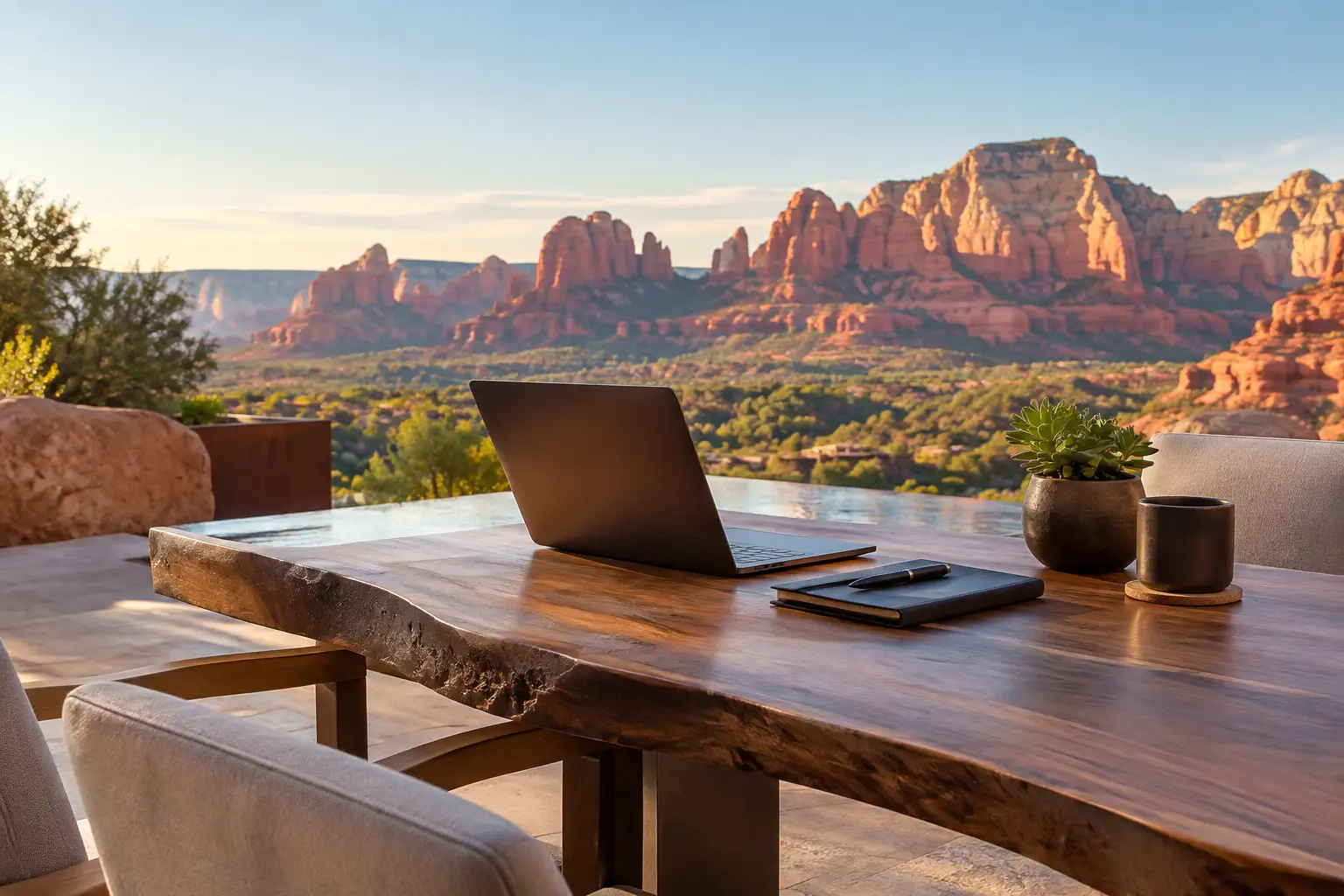

A VIP executive offsite location in Sedona should do more than provide an impressive boardroom view. It should change the quality of the conversations taking place inside it. When leaders step away from packed calendars, airport lounges, and fluorescent meeting rooms, they need enough privacy to speak candidly, enough beauty to reset perspective, and enough thoughtful care to stay present with one another.
Sedona offers a rare setting for that work. Its sculptural red rocks, clear desert light, and quiet trail systems create a natural distance from business as usual. For leadership teams, founders, boards, and private advisory groups, the destination can hold both focused strategy and the more human work behind it: trust, alignment, reflection, and renewal.
Why Sedona Works for High-Level Offsites
The strongest executive offsites do not fill every hour. They make room for the moments between sessions, when an idea is tested over breakfast, a difficult topic becomes easier to name on a walk, or a leadership team remembers why its work matters.
Sedona’s landscape supports that rhythm. Morning can begin with a private meditation or a walk beneath red-rock formations before the day turns toward strategic planning. After an intensive discussion, a guided hike or restorative treatment offers a genuine pause rather than another item on a crowded agenda. The setting is not a distraction from the work. When thoughtfully used, it becomes part of the conditions that allow better work to happen.
There is also a practical appeal. Sedona feels distinctly removed without requiring an international itinerary or a complicated travel commitment. For teams arriving from Phoenix, Northern California, New York, and other major U.S. markets, it creates the feeling of a true retreat while remaining attainable for a two- or three-night charter.
What Makes a VIP Executive Offsite Location Different
Not every luxury stay is suited to a confidential executive gathering. A large resort may offer polished amenities, but shared lobbies, public pools, and competing events can make a leadership group feel exposed or fragmented. For a VIP offsite, privacy is not simply a preference. It protects the purpose of the gathering.
A private estate creates a different experience. Your group is not navigating a property built around other guests’ schedules. Meals, meeting windows, wellness experiences, and downtime can be shaped around the people in the room. That continuity matters when the agenda includes sensitive decisions, leadership transitions, partnership conversations, or future-facing planning.
Look for an environment with distinct spaces for both togetherness and retreat. Executives need a comfortable place to convene, yet they also need private accommodations where they can step away, make a call, rest, or process the day. A well-designed estate lets the group remain connected without asking anyone to be constantly visible.
Privacy Should Be Felt, Not Announced
True discretion is often quiet. It is the ease of arriving through a private gate rather than crossing a busy hotel lobby. It is being able to linger over a conversation without an audience nearby. It is knowing that the evening can settle into stillness after a full day of decisions.
For a small, high-value group, exclusivity also improves attention. There are fewer logistical interruptions, fewer choices to negotiate, and fewer outside demands competing for focus. The result is a more intentional container for the work leaders rarely have time to do at home.
Pair Strategic Work With Restoration
An executive offsite should not become a business meeting relocated to a beautiful ZIP code. The location needs to create a meaningful contrast to the pace participants leave behind. Sedona is especially well suited to this balance because its outdoor beauty and wellness culture invite restoration without forcing a prescribed version of it.
Some groups may begin the morning with yoga, breathwork, or quiet meditation before moving into leadership sessions. Others may prefer an early red-rock hike followed by breakfast and a concentrated working block. Guest-exclusive massage, energy healing, sound bowl healing, and guided meditation can be offered after the day’s agenda, allowing participants to release physical tension and return to the group more grounded.
The right mix depends on the purpose of the retreat. A board preparing for a pivotal decision may need more uninterrupted meeting time and minimal programming. A founder-led team emerging from a demanding growth period may benefit from a slower cadence, guided reflection, and restorative care. Wellness should support the offsite’s intention, never compete with it.
Design an Agenda With Space Around It
The temptation for any executive retreat is to over-program. Leaders are accustomed to maximizing time, and bringing everyone together can feel too valuable to leave open. Yet a schedule that runs from dawn through dinner often produces the same fatigue participants hoped to escape.
A better approach is to choose one meaningful outcome for each day. The first day might focus on arrival, shared context, and the questions the group has avoided. The second can hold the deepest strategy work, with a long outdoor or wellness break built into the afternoon. The final morning can be reserved for decisions, commitments, and a clear plan for carrying the retreat home.
Leave room for informal connection. A private courtyard, an unhurried dinner, or a sunset gathering can do more for team trust than another presentation. These are the settings where senior leaders often speak less defensively, listen more generously, and see one another beyond their titles.
Let the Landscape Set the Pace
Sedona has its own quiet authority. The colors deepen at sunset. The trails invite movement without demanding performance. The desert night encourages people to put down their devices and stay in the conversation a little longer.
Building an offsite around those rhythms makes the experience feel rooted rather than staged. Schedule the most demanding work when the group is fresh. Protect sunset for a hike, a pause, or a shared meal. Avoid treating every minute as a deliverable. The spaciousness is part of the investment.
Choosing the Right Estate for Your Group
Before selecting a venue, consider the group size, the level of confidentiality required, and the desired balance between work and renewal. An intimate leadership team may be best served by a fully private estate with a small number of accommodations, while a larger department may need a more conventional retreat setting. Smaller is not automatically better, but a smaller property can create a depth of connection that a larger hotel cannot replicate.
Ask whether the estate can be fully chartered for your dates. Confirm that every guest has a private, restful place to sleep and that gathering spaces support the way your team actually works. Consider whether there is direct access to the landscape, as leaving the property for every outdoor moment can interrupt the retreat’s natural flow.
Personal planning also matters. The difference between a memorable offsite and a merely attractive one often lies in the details: a meeting space prepared before arrival, wellness sessions scheduled around the agenda, meals that feel celebratory but not heavy, and local experiences chosen for the group rather than selected from a generic menu.
At Eagle Dancer, a fully chartered six-acre estate offers five private casitas, red-rock immersion, and tailored wellness care for intimate executive gatherings. This kind of setting is particularly suited to leaders who value confidentiality, quiet luxury, and the freedom to create an agenda that feels entirely their own.
A Better Measure of Return
The value of an executive offsite is not measured by how many slides were reviewed or how many hours were spent in session. It is measured by what changes when participants return: a clearer decision, a repaired relationship, a stronger leadership rhythm, or a renewed sense of shared purpose.
Sedona cannot make those outcomes happen on its own. A beautiful place is not a substitute for honest preparation, skilled facilitation, or difficult conversation. But the right private setting can make those things more possible. It gives leaders room to hear themselves think, to see one another with fresh attention, and to rediscover the essence of the work they are building together.
Choose a place that protects that possibility. The most meaningful offsites leave participants with more than photographs of red rocks. They leave with the clarity to carry a better way of working back into everyday life.