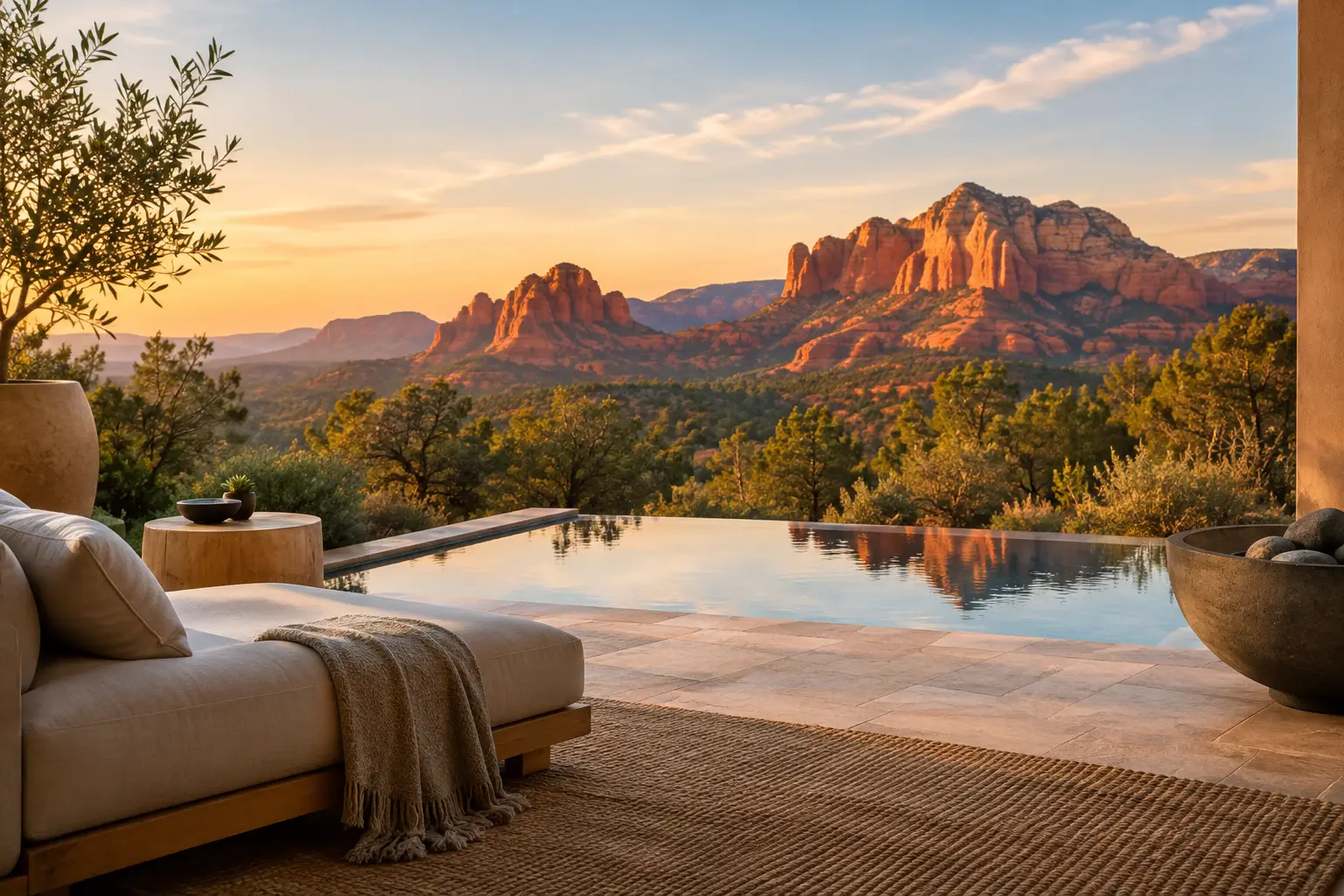

The most compelling luxury retreat trends are moving away from the grand lobby, the crowded pool deck, and the overplanned itinerary. Affluent travelers are seeking something more personal: a place where the landscape quiets the mind, service feels intuitive, and every detail leaves room for genuine connection. In Sedona, that might mean waking to the red rocks from a private casita, following a trail before breakfast, then returning for a restorative massage as the afternoon light warms the stone.
This is not luxury as spectacle. It is luxury as space, privacy, and permission to slow down.
Luxury retreat trends are becoming more intimate
For years, luxury hospitality often signaled abundance through scale – more restaurants, more amenities, more activity. That model still has its place, particularly for travelers who enjoy a social resort atmosphere. Yet couples, solo wellness travelers, and small private groups are increasingly choosing smaller estates and distinctive independent properties over large, impersonal settings.
The appeal is simple. Privacy changes the feeling of a stay. A private courtyard becomes a place for an unhurried morning coffee. A quiet pool is no longer a shared scene but a space to exhale. Hosts who know a guest’s intention – whether it is an anniversary, a babymoon, or a period of personal renewal – can shape the experience with care rather than a one-size-fits-all program.
For romantic travelers, intimacy is now a defining measure of luxury. They want beautiful surroundings, certainly, but they also want the ease of being together without a schedule imposed by a property’s daily rhythm. A thoughtfully appointed casita, a private dinner under desert stars, or an in-room couples massage can hold more value than a suite in a busy five-star hotel.
Wellness is shifting from performance to restoration
Wellness travel is maturing. Guests are less interested in proving how much they can accomplish during a retreat and more interested in feeling different when they leave. The new aspiration is not exhaustion disguised as self-improvement. It is nervous-system calm, better sleep, a renewed sense of perspective, and a return to the body.
That shift is changing what travelers look for. Massage remains essential, but guests also seek experiences that meet emotional and spiritual needs: sound bowl healing, meditation, gentle yoga, energy work, breathwork, and quiet time in nature. These offerings are most meaningful when they are optional, personal, and held in an environment that does not feel clinical or overly choreographed.
Sedona is particularly resonant for this kind of restoration. Its red-rock formations, wide skies, and storied energy-vortex landscape invite stillness without demanding any particular belief system. Some guests come specifically to explore the area’s spiritual character. Others simply feel their shoulders drop after a morning on the trail. Both experiences are valid, and the finest retreats make room for each.
There is a trade-off worth acknowledging. A wellness retreat with a fixed agenda can offer structure to guests who want guidance and community. A private estate offers greater freedom and discretion. The right choice depends on whether a traveler is seeking shared momentum or a deeply personal pace. For many high-achieving professionals and couples carrying full lives, the latter has become far more precious.
Place is no longer a backdrop
Travelers have become more discerning about the difference between visiting a destination and actually feeling connected to it. They want lodging that belongs to the landscape rather than accommodation that could exist anywhere.
This has elevated the importance of architecture, materials, and access. Adobe textures, natural stone, soft linens, native plantings, and expansive views are not decorative extras. They create an emotional bridge between indoors and out. Direct access to hiking trails adds another layer of ease, allowing guests to move from a peaceful morning inside to a red-rock trail without navigating traffic, parking, or crowds.
At Eagle Dancer, the estate experience is shaped by this relationship with Sedona’s sacred landscape. The setting is not simply something to photograph from a terrace. It becomes part of the retreat itself: a place to walk, reflect, celebrate, and rediscover the essence of life.
This trend also explains why overly polished, placeless design is losing some of its appeal. A luxury retreat should be comfortable, but it should also carry a sense of character. Guests remember how a destination made them feel far longer than they remember a generic marble bathroom.
Celebrations are becoming smaller and more intentional
Milestone travel has always been part of the luxury market, but the format is changing. Couples are increasingly choosing intimate destination weddings, elopements, vow renewals, anniversaries, engagements, and honeymoons designed around meaning rather than guest count.
A smaller celebration creates room for details that might otherwise get lost. There is time for a private ceremony at golden hour, a thoughtful welcome ritual, a celebratory meal without a banquet-hall feeling, and a few extra days for the couple to settle into the moment. Families and close friends can also remain nearby without the logistics of a large resort or traditional venue.
The same desire is shaping babymoons. Expecting parents often want a refined escape before their lives change, but they may not want a destination built around constant activity. They are looking for quiet accommodations, nourishing food, gentle wellness options, beautiful scenery, and the reassurance that their comfort will be treated as a priority.
In each case, luxury is expressed through thoughtful planning. Guests do not necessarily need more choices. They need the right choices, arranged with warmth and care.
Private estate charters are redefining group retreats
The demand for privacy extends beyond romantic travel. Executive teams, creative partners, and close-knit groups are seeking fully private environments for retreats and offsites. A chartered estate offers confidentiality that a conventional hotel cannot always provide, along with the uncommon benefit of gathering in a setting that feels restorative rather than corporate.
The strongest group retreats balance focused work with open space. A strategy session may be more productive after a guided hike. A difficult conversation may soften after a shared meal beneath the stars. Wellness offerings can support the group without becoming obligatory, giving each person a way to reset between meetings or celebrations.
Still, exclusivity is not automatically the right fit for every group. Larger teams may need the infrastructure and meeting capacity of a major resort. But for leadership groups, founders, family gatherings, and teams who value discretion, a private estate can create a level of trust and connection that is difficult to reproduce in a public venue.
Service is becoming quieter, warmer, and more tailored
One of the most meaningful luxury retreat trends is almost invisible: guests increasingly value service that anticipates without intruding. They want to feel cared for, not managed. The best hospitality remembers preferences, offers useful guidance, and creates beautiful moments while preserving a guest’s sense of autonomy.
This is especially important in wellness and romance travel. A guest may want help arranging a healing session, planning a proposal, or choosing a trail suited to the morning’s weather. They may also want uninterrupted time with a partner or space to be alone. Attentive service knows the difference.
Owner-led hospitality and small teams often have an advantage here. They can bring local knowledge, flexibility, and heartfelt attention that standardized operations may struggle to match. The experience feels less transactional because it is shaped around the people who have arrived, not merely around the reservation on file.
The future of luxury retreat travel will not be defined by how much is offered. It will be defined by how deeply a place helps guests feel present. Choose the retreat that gives you room to unplug + relax, let the landscape do its quiet work, and return home with more than photographs.