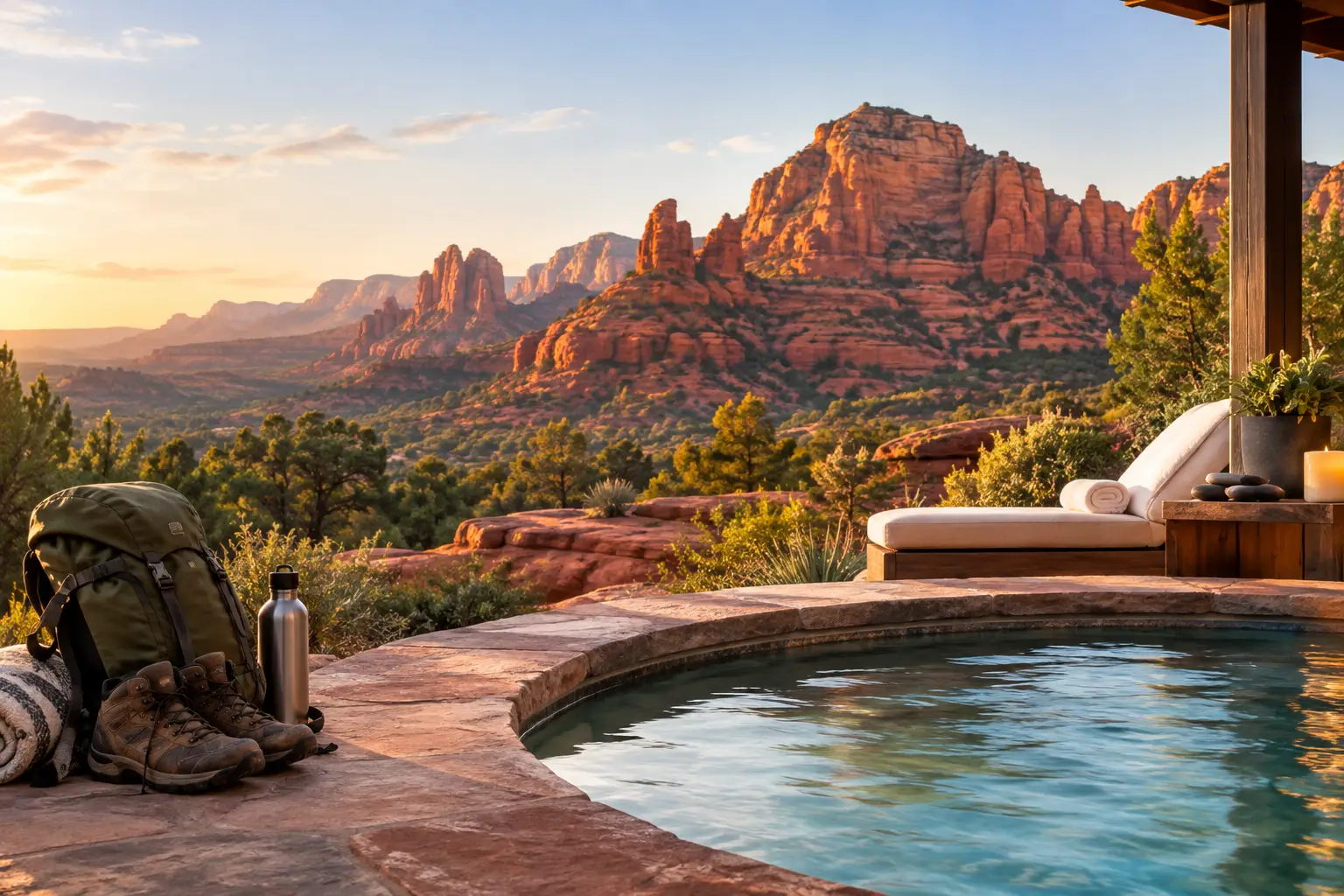

The red rocks ask something of you. A sunrise climb can leave your lungs clear, your legs pleasantly tired, and your attention fully anchored in the desert’s sculptural beauty. To combine hiking with spa recovery well, however, requires more than booking a massage after a long day. It means giving the body enough space to receive both the exhilaration of the trail and the quiet restoration that follows.
In Sedona, this rhythm feels especially natural. A private morning on the trail can move into an unhurried afternoon of water, nourishment, bodywork, and stillness beneath wide desert skies. The result is not a packed itinerary. It is a more complete kind of escape – one that lets you return home feeling awakened rather than depleted.
How to Combine Hiking With Spa Recovery With Intention
The most restorative hiking days begin before the first step. Sedona’s elevation, dry climate, and intense sunshine can make a familiar distance feel more demanding than expected, particularly for guests arriving from sea level or a cooler region. Choose a trail that suits your energy, rather than treating every morning as an athletic challenge.
For a romantic getaway, that may mean a gentle sunrise walk with time to pause for photographs and quiet conversation. For a solo renewal stay, it may mean a longer route with room to reflect. Couples celebrating an engagement, anniversary, or honeymoon often find that a shared hike becomes more memorable when there is no need to rush back to a crowded hotel lobby or a fixed schedule.
Start early when possible. The morning light softens the red rock walls, temperatures are kinder, and the desert holds a profound hush before the day gathers momentum. Bring more water than you expect to need, add electrolytes if the hike will be extended, and eat a light but sustaining breakfast. Hydration is not a small detail here. It directly affects how your muscles recover, how deeply you rest, and whether a spa treatment feels soothing rather than overwhelming.
Just as important, leave a margin around your plans. A trail may take longer because you stop at a view, follow the changing color of the rocks, or simply need a slower pace. That is not time lost. It is part of being present in Sedona’s landscape.
Let the Trail Determine Your Recovery
Not every hike calls for the same kind of spa afternoon. The most thoughtful wellness experiences respond to what the body actually needs.
After a steep or rocky route, massage can bring welcome attention to calves, hips, feet, shoulders, and the lower back. Tell your therapist how you moved that day and where you feel fatigue. A customized massage does not have to be intense to be effective. Gentle, deliberate work may be the better choice if you have another hike planned for tomorrow, while deeper work can be appropriate when the following day is reserved for rest.
If the hike was more contemplative than strenuous, consider recovery that supports the nervous system as much as the muscles. Sound bowl healing, guided meditation, or energy work can create a beautiful transition from the outward focus of the trail to an inward sense of calm. For many guests, Sedona’s energy-vortex setting adds a meaningful layer to this pause. You do not need to arrive with a particular spiritual practice. Curiosity, openness, and a willingness to be still are enough.
Yoga can also be an elegant bridge between exertion and restoration, provided it is tailored to the day. Restorative poses, supported stretches, and breath-led movement can ease tightness without asking already-worked muscles to perform again. Save a vigorous flow for a non-hiking day or a morning when you are taking an easier route.
Create Space Between the Summit and the Spa
The hours immediately after hiking matter. Rather than moving directly from dusty boots to a treatment table, give yourself time to cool down and reset. Shower away the trail, drink water slowly, and enjoy a nourishing meal or snack with protein, carbohydrates, and minerals. A little unstructured time in a private courtyard or a shaded room lets the heart rate settle and helps the body absorb the experience of being outdoors.
This interval is one reason a secluded estate stay can feel so different from a conventional wellness itinerary. You are not navigating public spaces, waiting for elevators, or calculating a drive across town after a long hike. At Eagle Dancer, the intimacy of five private casitas and the surrounding six-acre sanctuary makes it possible to let the transition unfold at your own pace: trail, shower, rest, treatment, then evening under the desert sky.
Privacy also changes the emotional tone of recovery. A couple can return from a hike and simply be together, without performing relaxation in a busy resort setting. A solo traveler can spend an hour reading in silence before a healing session. A small group on a private retreat can build in a shared restorative practice without losing the sense of personal space that makes wellness feel genuine.
Plan a Sedona Stay Around Energy, Not a Checklist
A satisfying hiking-and-spa escape usually alternates effort with ease. Consider making your arrival day gentle, especially if travel, heat, or altitude has left you tired. A short scenic walk, a slow dinner, and an early night can prepare you for a more ambitious outing the next morning.
On a two- or three-night stay, one stronger hike paired with an afternoon massage may be plenty. Use the next day for a softer walk, yoga, sound healing, or time spent lingering over coffee in your casita. If you are staying longer, you can create a more varied rhythm: an active day, a restorative day, then another outdoor adventure. The goal is not to prove how much of Sedona you can cover. It is to feel connected to it.
This approach is especially helpful for milestone travel. An elopement weekend, babymoon, honeymoon, or vow renewal deserves moments of spaciousness. A strenuous hike may be a wonderful part of the celebration, but it should not leave you too exhausted to enjoy a private dinner, a sunset toast, or the simple pleasure of retreating together into a beautiful room.
There are practical trade-offs, too. Schedule deeper massage after your final major hike if you know your body tends to feel tender afterward. Choose lighter bodywork between active days. If you are pregnant, recovering from an injury, managing a health condition, or unaccustomed to desert hiking, consult the appropriate medical professional and select treatments and trails accordingly. Luxury is not about ignoring the body’s signals. It is about having the freedom to honor them.
Make Recovery Part of the Memory
The finest travel memories are often sensory: cool water after sun-warmed stone, the scent of desert air after an afternoon shower, the heaviness of relaxed limbs beneath soft linens, and the color of the rocks at dusk. When hiking and wellness are thoughtfully paired, recovery is not merely maintenance between adventures. It becomes part of the experience itself.
Let the desert set a slower tempo. Take the trail that leaves room for wonder, accept the invitation to rest when your body asks, and allow the evening to belong to stillness. Sedona has a way of rewarding those who make space to feel where they are.