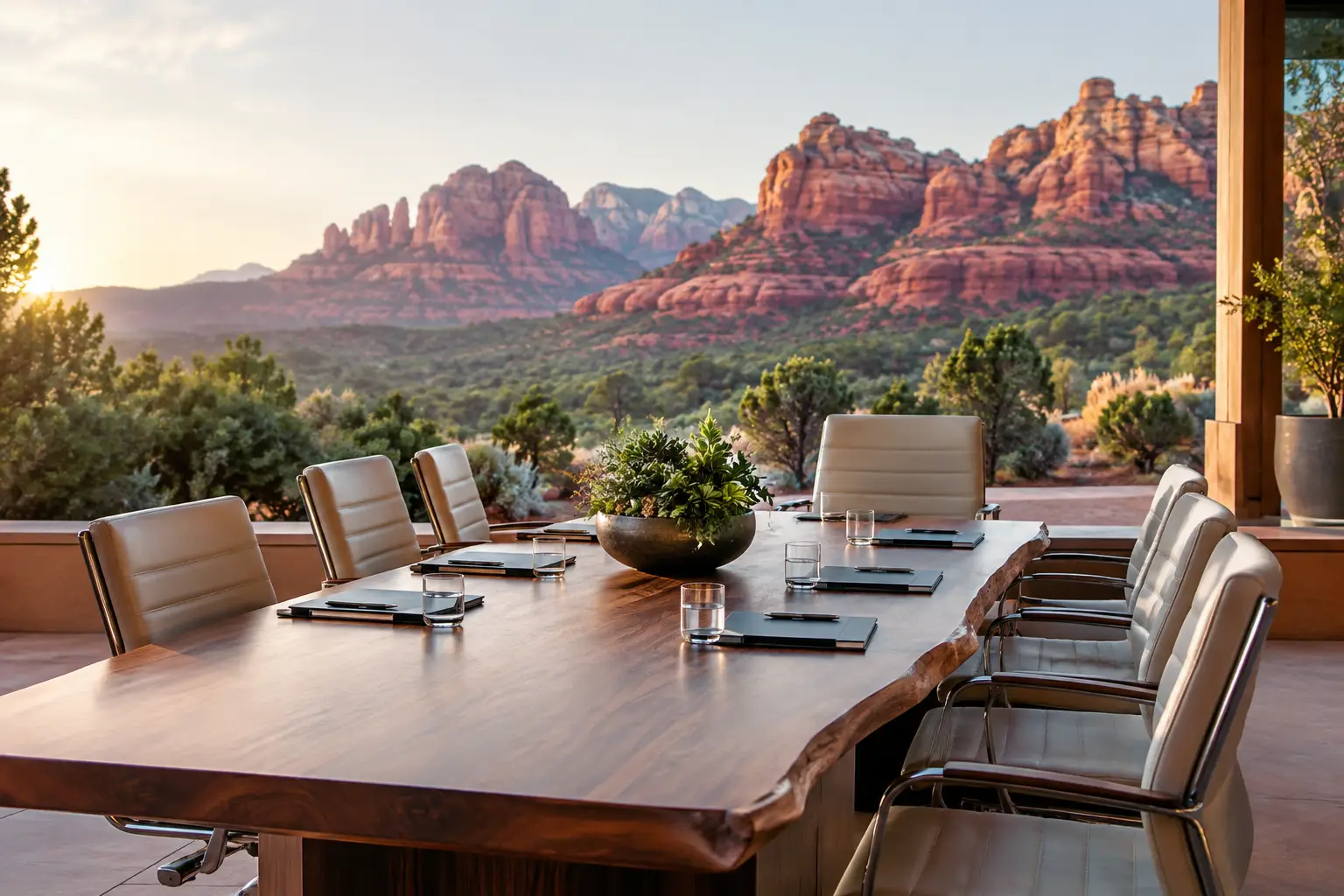

A boardroom can hold an agenda. It cannot always hold the attention of leaders who have spent months moving from one screen to the next. A Sedona corporate retreat venue changes the setting, and with it, the quality of the conversation. When red rock rises beyond the courtyard, trails begin close to the door, and the day has room to breathe, a team can move beyond routine updates toward clarity, trust, and meaningful direction.
Sedona is not the right choice for every company gathering. If the goal is a large product launch, a convention-scale program, or back-to-back presentations for hundreds of guests, a traditional conference hotel may be the more practical fit. But for executive teams, founding partners, leadership circles, and high-value private groups, a more intimate estate setting creates something difficult to manufacture elsewhere: undivided attention.
What a Sedona Corporate Retreat Venue Should Offer
The most memorable retreats are designed around an intention, not a meeting-room package. Before choosing a property, decide what your group needs most. Is it a confidential strategic reset? A chance for a newly formed leadership team to establish trust? A reward for a small group that has carried a demanding season? The answer should guide every choice, from the size of the estate to the rhythm of the itinerary.
Privacy is often the first consideration. A retreat loses its purpose when participants feel watched, rushed, or surrounded by the noise of unrelated guests. A fully chartered private estate allows leaders to speak freely, gather casually after planned sessions, and let conversations continue naturally over coffee, a shared meal, or sunset on the terrace. It also gives planners more control over the atmosphere, timing, and level of discretion.
The physical setting matters just as much. Sedona’s red-rock landscape is not merely a beautiful backdrop for group photos. Time outdoors can create a welcome interruption to habitual thinking. A morning walk before a planning session, a quiet pause beneath the open sky, or an afternoon hike can help a team arrive more present than another hour at a conference table ever could.
Space for focus and unplanned connection
Look for a venue that balances gathering spaces with places to step away. A group needs a comfortable setting for facilitated discussion, but it also needs corners for a private phone call, a reflective moment, or an honest one-on-one exchange. The strongest retreat venues make both feel intentional.
Residential-style accommodations can be especially valuable for small executive groups. Rather than returning to anonymous hotel rooms at the end of a structured day, guests remain within a shared environment while preserving personal sanctuary. Separate casitas, private courtyards, soft interiors, and scenic views give each person room to restore without losing the ease of being together.
Why Smaller Retreats Often Create Bigger Results
A large hotel has conveniences, particularly when logistics and headcount are the primary concern. Yet for a group of senior decision-makers, scale can dilute the experience. Elevators, crowded common areas, fixed banquet schedules, and public meeting floors tend to return everyone to a corporate mode before the retreat has a chance to do its work.
A small estate asks for a more considered guest list, and that is its advantage. When every attendee has a clear reason to be there, the program can become more responsive. Discussions can extend when they are productive. A wellness session can replace an afternoon meeting when the group needs restoration more than another slide deck. Dinner can become the setting where a key idea finally lands.
This does not mean an intimate retreat should feel unstructured. Thoughtful planning is essential. Establish the decisions the group needs to make, the questions it needs to confront, and the outcomes that will carry home. Then leave breathing room around the agenda. Sedona invites a slower pace, and forcing a full office-day schedule into a destination retreat can diminish the return on the investment.
Wellness Is a Strategic Choice, Not a Detour
Executives often arrive carrying more than a full calendar. They may be managing fatigue, change, difficult decisions, or the quiet pressure of leading others. A retreat that incorporates wellness with discernment can support better participation and more grounded leadership.
This is not about filling an itinerary with activities for their own sake. It is about offering ways to reset the nervous system and reconnect with personal clarity. A guided meditation before a visioning session, yoga at the beginning of the day, or a guest-exclusive massage after a demanding workshop can shift the energy of the group. Sound bowl healing and energy work may be meaningful additions for teams open to Sedona’s spiritual character, while others may prefer a simple trail walk and quiet time outdoors.
The right approach depends on the culture of the company. Wellness should feel invitational, not compulsory. Give guests options, explain the purpose of each experience, and make space for those who restore best through solitude. Respecting individual preferences is part of creating a truly refined retreat.
Let Sedona shape the agenda
Sedona works best when its landscape is allowed to influence the pace of the gathering. Schedule high-focus sessions in the morning, when minds are fresh and the light across the rocks is soft. Protect time in the afternoon for reflection, movement, or personalized spa care. Reserve at least one evening for a shared experience without a business objective attached to it.
A sunset gathering, a chef-led dinner, or simply time beneath the desert stars can become the emotional center of the retreat. These moments are not distractions from the work. They are where colleagues see one another beyond roles and titles, which often makes the work more honest the next day.
Questions to Ask Before Booking
The most beautiful venue is only a strong fit if it can support the actual needs of your group. Ask whether the entire property can be reserved exclusively, how many guests can stay comfortably, and how meeting spaces can be arranged for your preferred style of collaboration. Confirm the practical details early, including arrival flow, meal preferences, transportation, connectivity requirements, and any accessibility considerations.
It is also worth asking who will guide the experience. A property with attentive, owner-led hospitality can make an enormous difference for a small group. You want hosts who understand when to anticipate a need and when to preserve the privacy of the retreat. Bespoke planning should feel personal and calm, not overly programmed.
At Eagle Dancer, a private estate charter brings a leadership group together across five private casitas on a gated six-acre Sedona sanctuary. With dramatic red-rock surroundings, direct access to nearby trails, and tailored wellness experiences available exclusively for guests, the estate is designed for groups that value quiet luxury over a crowded resort atmosphere.
Design a Retreat People Will Carry Home
The success of an offsite should not be measured only by the number of agenda items completed. Pay attention to what you want participants to remember six weeks later. Perhaps it is the decision that brought a scattered strategy into focus. Perhaps it is the renewed confidence between leaders. Or perhaps it is the rare feeling of having been genuinely cared for while doing consequential work.
Build in a closing ritual that suits your team. It might be a final circle naming commitments, a sunrise walk, or a simple shared breakfast before departure. The point is to create a pause between the retreat and the return to ordinary demands, so each person leaves with a clear sense of what they are carrying forward.
The right venue will not solve a company’s challenges on its own. It can, however, offer the privacy, beauty, and spaciousness required for the people responsible for those challenges to think with greater honesty. In Sedona, that space can become a quiet invitation to return to the work with clearer minds, steadier energy, and a deeper connection to one another.