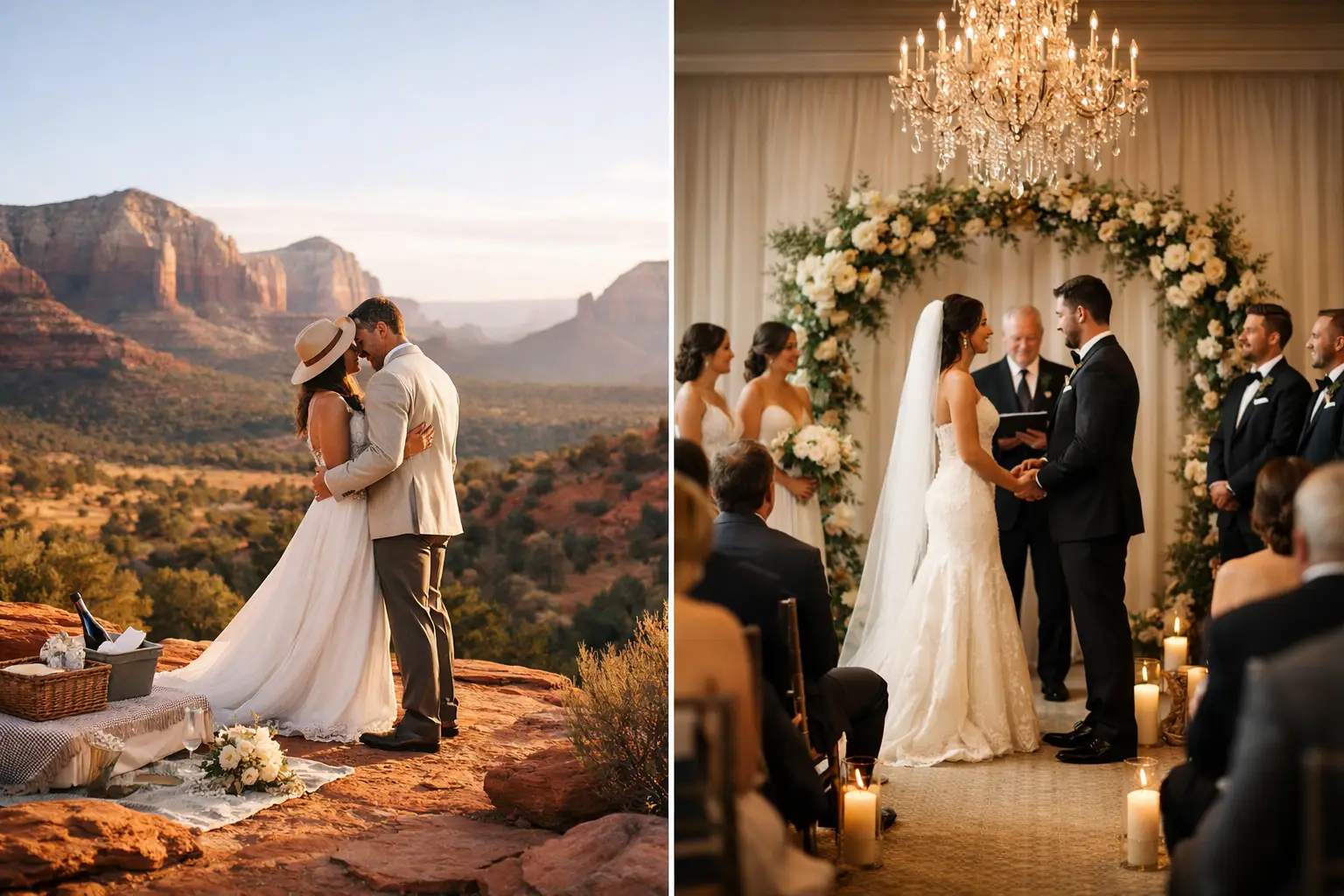

A wedding day can feel most meaningful when it sounds like the couple at its center. Yet the choice between an elopement versus traditional wedding is often framed too simply: private and spontaneous on one side, grand and formal on the other. In reality, both can be beautiful, deeply personal celebrations. The right path comes down to the experience you want to remember when the music has faded and the guests have gone home.
Elopement Versus Traditional Wedding: The Real Difference
An elopement is not necessarily a secret ceremony or a rushed courthouse moment. For many couples, it is an intentional wedding experience built around privacy, presence, and place. It may include only the two of you, or a very small circle of loved ones. The focus is less on hosting a crowd and more on creating spaciousness for vows, photographs, a private dinner, and the beginning of married life.
A traditional wedding generally centers on gathering. It can range from an intimate 50-person reception to a multi-day celebration with hundreds of guests. Its energy comes from shared ritual: family arrivals, a ceremony aisle, toasts, dancing, and the joyful complexity of bringing different chapters of your life into one room.
Neither choice is more romantic by default. Romance is created by alignment. A couple who feels nourished by community may find a full celebration exhilarating. A couple craving calm, emotional privacy, and unhurried time together may feel most at home with an elopement in a setting that invites them to unplug + relax.
When an Elopement Feels Like the Right Choice
Elopements offer something rare in modern life: uninterrupted attention. Rather than moving through a tightly choreographed schedule, you can wake slowly, share coffee in your private courtyard, receive a couples massage, exchange vows beneath the red rocks, and linger over dinner without watching the clock.
That freedom is especially meaningful for couples who are planning after a demanding season, blending families, marrying later in life, or simply prefer their most intimate moments to remain their own. It can also be ideal for those who want the destination to be part of the ceremony itself. In Sedona, a sunrise trail walk, warm desert light, and the stillness of the surrounding landscape can make the day feel less like an event and more like a sacred passage.
An elopement can be luxurious without becoming elaborate. The budget that might have covered a large guest count can instead support a longer stay, exceptional dining, fine florals, custom attire, meaningful photography, or wellness rituals that help you arrive grounded. At Eagle Dancer, couples can pair a private estate stay with guest-exclusive wellness care and a bespoke celebration shaped around their pace.
Still, intimacy has a trade-off. If your closest friends and family would feel deeply hurt by not being present, that emotional weight deserves honest consideration. An elopement is most peaceful when it is chosen for yourselves, not as a way to avoid every difficult conversation.
The emotional advantages of keeping it small
Small ceremonies create room for unscripted moments. You may hear every word of your vows without a microphone. You may have time to sit in silence after the ceremony, let the magnitude of the commitment settle in, and take photographs without feeling pulled away from the person you just married.
They also reduce performance pressure. Some couples love the feeling of a room full of witnesses. Others feel exposed by it. If the thought of being watched makes you anxious rather than joyful, a private ceremony can allow your real personality and connection to come forward.
The practical advantages of eloping
A smaller celebration usually means fewer logistics, fewer opinions, and more flexibility. You can choose a weekday, change a timeline for weather, or build your day around a favorite hiking trail and a long lunch rather than a reception hall’s strict access window.
It can also offer more control over spending, though it is not automatically inexpensive. Luxury elopements may involve travel, private lodging, photography, florals, a chef, an officiant, permits, and several nights of accommodations. The difference is that your investment is concentrated on the two of you and the quality of the experience, rather than spread across a large-scale production.
What a Traditional Wedding Does Beautifully
A traditional wedding gives loved ones a role in your story. Parents can welcome guests, friends can offer toasts, siblings can stand beside you, and generations can share a table. For couples with close-knit families or a wide community that has supported their relationship, this collective joy can be profoundly moving.
There is also value in ritual at scale. Seeing a room filled with people who have traveled to celebrate you can make a marriage feel held by a larger community. The dance floor, the laughter, and the small conversations between guests who might never otherwise meet can become part of the memory you treasure most.
For some, a traditional wedding is not about extravagance. It is about generosity. It is the chance to thank the people who helped shape your lives and offer them a beautiful moment in return.
The costs beyond the budget
Large weddings demand more than financial planning. They require decisions about invitations, seating arrangements, transportation, food preferences, family dynamics, weather contingencies, and the expectations that naturally come with hosting. Even with an excellent planner, the couple may spend much of the day greeting guests and managing a schedule.
That is not a reason to avoid a traditional wedding. It simply means you should plan for protection around your private time. Consider a first look, a quiet meal for two before the reception, or a honeymoon stay that begins immediately after the event. A well-designed wedding can hold both celebration and intimacy, but it requires intention.
Cost Is Personal, Not Just Numerical
It is tempting to compare an elopement and a traditional wedding only through a total budget. A better question is what each dollar creates for you. A 120-person wedding may be exactly right if sharing a meal with your full community is nonnegotiable. A two-person celebration may feel more valuable if it includes a destination stay, restorative spa treatments, and time to savor the beginning of your marriage.
Be realistic about hidden expenses on both sides. Elopements can grow when travel, premium vendors, styling, and extended lodging are involved. Traditional weddings can grow quickly with guest count, catering, rentals, bar service, transportation, and late additions. Set a number that feels responsible, then identify the three elements that matter most. Let those priorities guide the rest.
A Third Path: The Intimate Destination Wedding
You do not have to choose between two guests and two hundred. An intimate destination wedding can bring together your nearest people while preserving the stillness and care of an elopement. Think of a small ceremony at golden hour, a long table dinner beneath the desert sky, and a few days of shared hiking, yoga, or relaxation before everyone returns home.
This format works well for couples who want family present but do not want their wedding to become a large production. It also gives guests a fuller experience of the destination. In Sedona, a celebration can be surrounded by red-rock views, quiet trails, restorative bodywork, and the grounding sense of place that draws people here from across the country.
The key is to define “small” early. A guest list of 12 creates a different experience from a guest list of 40, even if both are described as intimate. Choose a number that allows you to recognize each face, share real conversation, and remain present in your own day.
Questions Worth Asking Before You Decide
Begin with the morning after. Would you rather wake up beside each other in complete privacy, remembering every word you exchanged? Or would you rather replay the joy of your parents’ toast, your best friend’s dance-floor speech, and the sight of everyone you love in one place?
Then consider your energy. Do you feel excited by planning, hosting, and celebrating with a crowd? Or do those details create tension that overshadows the promise you are making? Finally, ask whose expectations are influencing the decision. Loved ones can have feelings, but they should not be the sole authors of your wedding day.
If you are torn, imagine each option in vivid detail. Picture the clothes, the setting, the pace, the people, and the quiet moments between. Notice which vision makes your shoulders soften. That response may tell you more than any wedding trend or spreadsheet ever could.
Your marriage deserves a beginning that feels like a true reflection of your shared life: whether that means a joyful room filled with everyone you love, or two hands held close beneath Sedona’s wide and luminous sky.