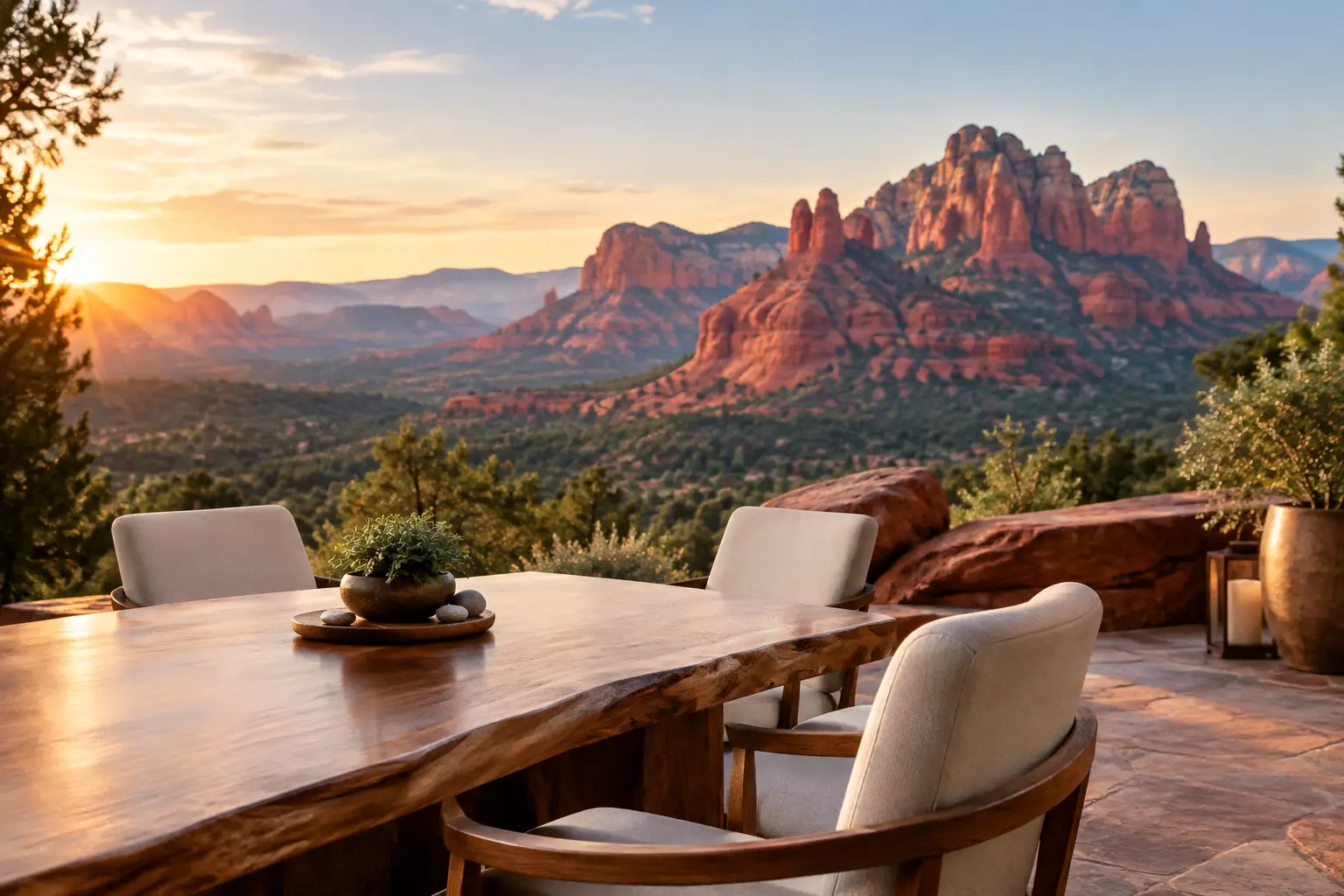

A consequential decision rarely arrives because a team spent another day under fluorescent lights. It takes shape when leaders have enough distance to hear one another clearly, enough privacy to speak candidly, and enough quiet to think beyond the next quarter. An executive retreat Sedona Arizona offers all three, set against red-rock horizons that make the usual agenda feel appropriately smaller.
For leadership teams, founders, and private organizations, Sedona is not simply a beautiful setting for an offsite. It is a place to step out of familiar patterns. Morning light fills the canyon walls, trails begin close to home, and the natural stillness asks for a different pace. The result can be more focused work, more honest conversation, and a renewed sense of shared direction.
Why an Executive Retreat in Sedona Arizona Changes the Conversation
The best retreats create a meaningful contrast with daily operations. A conventional hotel may be efficient, but its busy lobby, public dining room, and rotating flow of guests can keep leaders in work mode without giving them true space to reset. A private Sedona estate changes the atmosphere from the moment the group arrives.
Instead of dividing the day between meeting rooms and separate hotel floors, teams can gather in a setting that feels personal, intentional, and removed from distraction. Private casitas and shared spaces make room for both connection and solitude. There is time for a thoughtful conversation over coffee in a courtyard, a private walk after a difficult session, or a quiet evening beneath a wide desert sky.
Sedona’s reputation as an energy-vortex destination also resonates with leaders who are open to reflection and restoration. That does not require anyone to adopt the same spiritual language or wellness practice. For some, the landscape simply offers perspective. For others, meditation, sound healing, or energy work becomes a meaningful part of releasing stress and returning to purpose. A well-planned retreat leaves room for both approaches.
Privacy Is a Strategic Advantage
An executive offsite may involve sensitive discussions: succession planning, new market strategy, organizational change, investment decisions, or conversations that cannot comfortably happen near colleagues or clients. Privacy is not an indulgence in these moments. It is part of the working environment.
A fully chartered private estate allows a group to settle in without sharing its experience with outside guests. There is no need to navigate crowded common areas or wonder who may be listening nearby. Leaders can move naturally between formal sessions, informal conversations, meals, and restorative pauses while remaining within a protected setting.
This matters especially for small leadership teams. Large conference venues are designed to serve many groups at once. They can provide scale, but they often lack the intimacy that helps a close team address what is actually happening beneath the surface. A smaller estate is better suited to groups that value discretion, unhurried hospitality, and a setting where every detail can support the purpose of the gathering.
At Eagle Dancer, an estate charter brings the property together as a private home base for multi-day executive retreats. With five private casitas across a gated six-acre setting, the experience balances shared connection with the ability to retreat into one’s own serene space at day’s end.
Build an Agenda With Room to Breathe
A retreat should not be a compressed version of an office week. When every hour is programmed, leaders may leave with more notes but little clarity. The most effective rhythm alternates concentrated work with time outdoors, nourishing meals, and periods when nothing is expected of anyone.
Begin with arrival, not immediate output
If possible, give guests time to arrive, settle into their casitas, and let the travel day fall away. An opening dinner is often more valuable than an opening presentation. It creates a relaxed first conversation and signals that the retreat will be conducted with care rather than urgency.
The following morning can begin with an optional grounding practice, such as gentle yoga, guided meditation, or a quiet walk. This is not about forcing a wellness agenda onto a team. It is about recognizing that a rested, present group is more prepared for the work ahead.
Reserve the clearest hours for the hardest questions
Place the conversations requiring the most focus early in the day, when the mind is fresh and the surrounding landscape still feels quiet. Limit the number of major decisions on the agenda. A team that identifies two or three true priorities and agrees on ownership may accomplish more than one that tries to solve every issue at once.
Afternoons are ideal for less structured collaboration, creative planning, or a guided outdoor experience. Sedona’s trail access offers a natural reset between sessions. Walking side by side can soften hierarchy and help a stalled conversation move forward without the pressure of facing one another across a table.
Let wellness serve the work
Massage, sound bowl healing, meditation, and energy healing can be integrated as optional experiences rather than scheduled obligations. Some executives will welcome a deeply restorative treatment; others may prefer time alone with a book or an unhurried hike. The thoughtful choice is to offer possibilities without making participation performative.
The same principle applies to the retreat’s tone. A leadership group may need strategic rigor, emotional repair, or a renewed creative spark. Often it needs all three. The setting and wellness offerings should support the group’s real intention, not distract from it.
Choose the Right Retreat Format for Your Team
There is no single ideal structure for an executive gathering. A founder-led company preparing for a major transition may need facilitated, decision-focused days. A long-standing leadership team may benefit more from reconnecting, revisiting values, and making room for candid conversations that routine has pushed aside.
A small group seeking confidentiality will generally benefit from a complete estate charter. It gives the experience a coherent center and lets the group shape its own flow. On the other hand, a larger organization with formal presentations, extensive production needs, or dozens of attendees may require a traditional conference venue. Quiet luxury is most powerful when the group size matches the intimacy of the place.
Before choosing dates or planning activities, define what must be different when everyone returns home. Perhaps it is a clarified three-year vision, a repaired leadership dynamic, a succession plan, or simply a team that remembers how to trust one another. That answer should guide every choice, from session design to the amount of free time on the schedule.
Details That Make a Retreat Feel Considered
Luxury is often felt in the absence of friction. It is the comfort of knowing that accommodations are prepared, the pace has been considered, and guests do not need to manage logistics while trying to participate fully. Personalized planning, guest-exclusive wellness care, and a beautiful private setting allow hosts to focus on their people instead of operations.
Consider travel timing with care. Spring and fall bring particularly inviting conditions for outdoor time, while summer schedules may call for earlier hikes and more restorative afternoons indoors. Winter can offer a quieter, more contemplative mood, though weather flexibility becomes part of the plan. The right season depends on whether the group wants active trail time, deep rest, or a balance of both.
Food, too, should support the rhythm of the gathering. Long, nourishing meals encourage conversation, while lighter daytime choices can help maintain energy during strategic sessions. Avoid treating every evening as a formal event. One beautifully hosted dinner may be memorable; another night may be better left open for rest, private reflection, or an intimate conversation under the stars.
Make Space for What Cannot Happen at the Office
The lasting value of a Sedona retreat may emerge in the unscheduled moments: a leader finding language for a concern during a morning walk, two colleagues reconnecting beside a fire, or a team recognizing that its next chapter requires a different way of being together. These moments cannot be forced, but they can be invited through privacy, beauty, and a pace that honors the human side of leadership.
Plan the work with intention, then protect enough open space for the landscape to do its part. When leaders return to their daily responsibilities, they should carry more than an action list. They should return with steadier perspective, clearer relationships, and a renewed capacity to lead well.