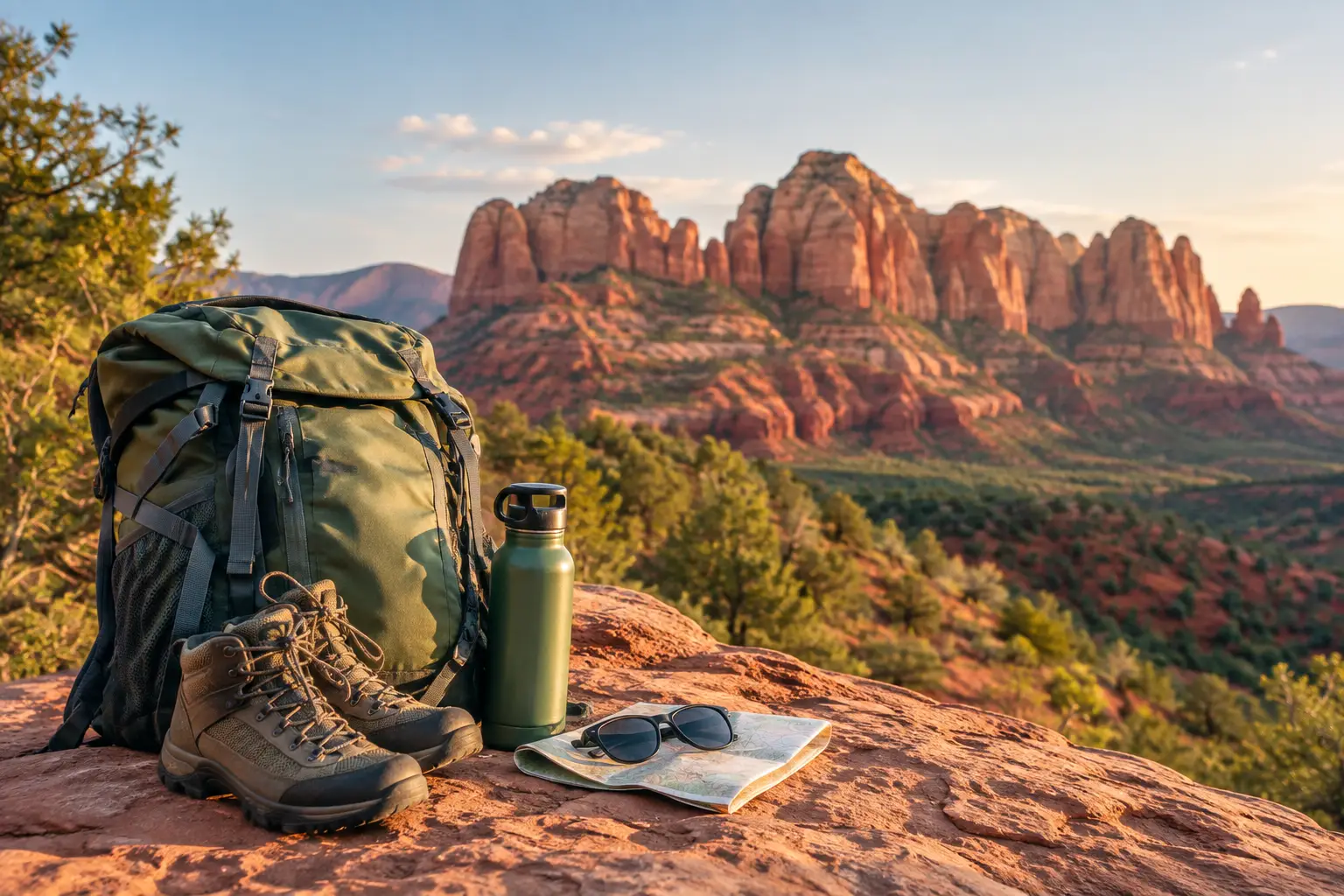

The red sandstone can look close enough to touch from a private courtyard, then feel beautifully vast once you begin walking toward it. Knowing what to pack for red rock hiking means honoring both sides of a Sedona day: the exhilaration of open trail and the deep restoration that follows. This is high-desert country, where strong sun, shifting temperatures, slickrock, and quiet solitude call for a little more intention than an ordinary afternoon walk.
A well-packed day lets you move through the landscape with ease rather than managing preventable discomfort. It also leaves room for what brought you here in the first place: a shared sunrise, the hush of juniper, a pause beneath towering cliffs, and a return to quiet luxury when the trail is behind you.
Pack for red rock hiking with the desert in mind
Sedona hiking is not one fixed experience. A shaded canyon trail in December asks something entirely different from an exposed ridge in July. Altitude, trail length, cloud cover, and your comfort with uneven terrain all matter. Start with the forecast, but prepare for a wider range than the number on your weather app suggests.
The essential foundation is water, sun protection, supportive footwear, and a layer for changing conditions. From there, build around your plans. A gentle morning walk before breakfast may only require a small daypack. A longer route through exposed terrain deserves more water, a substantial snack, navigation support, and enough gear to keep a small inconvenience from becoming a difficult afternoon.
Water is the first luxury
Desert air can be deceptively dry. You may not notice how much you are sweating, especially in cooler weather or during a breezy morning, yet dehydration can arrive quickly as the day warms. Carry more water than feels necessary, particularly if your route has little shade or you are visiting from a cooler climate.
For many guests, two liters per person is a sensible starting point for a shorter outing, with additional water for longer hikes, hotter days, or more strenuous elevation. An electrolyte packet is a small addition with an outsized benefit after a warm hike. Do not rely on finding water along the trail, and do not count on natural sources being safe to drink.
Choose shoes for rock, not just miles
Red rock is unforgettable underfoot, but it is not always forgiving. Smooth sandstone can become slick with loose gravel, sand, rain, or a thin layer of frost. Choose broken-in hiking shoes or trail runners with reliable tread and enough structure to support your feet on uneven ground.
Heavy boots are not required for every Sedona trail. For an easy, well-traveled path, a stable trail shoe may feel lighter and more comfortable. For routes with rougher footing, steeper climbs, or ankle-sensitive hikers, a supportive boot can be worthwhile. What matters most is fit. New shoes, fashionable sandals, and smooth-soled sneakers can turn a memorable walk into a day of blisters or strained ankles.
Dress in layers that feel considered
The desert rewards adaptable clothing. Mornings can begin cool enough for a soft long-sleeve layer, while midday sun calls for breathable fabric and less coverage. In spring and fall, it is common to want both within a few hours.
Wear moisture-wicking pieces that allow freedom of movement. Lightweight long sleeves and pants offer welcome sun protection without feeling heavy, while shorts can be ideal on a mild day if you are comfortable with brush and exposed legs. Avoid cotton as your only insulating layer in cold or wet conditions. Once damp, it loses much of its warmth.
Bring a light insulating layer and a wind-resistant shell when the forecast is cool, stormy, or variable. Evenings arrive with a noticeable desert chill, especially after the sun slips behind the formations. A simple layer in your pack makes it easier to linger for golden light rather than rushing back because you are cold.
A wide-brimmed hat offers excellent coverage, though a baseball cap works well when paired with sunscreen. Sunglasses with dependable UV protection reduce eye strain on pale rock and bright open terrain. Apply broad-spectrum sunscreen before you leave, then bring it along for reapplication. The desert sun does not need summer heat to be intense.
The small essentials that protect the experience
A compact daypack keeps your hands free and your pace relaxed. Choose one that carries close to the body, with room for water, food, layers, and a few safety items. A fully packed luxury tote may look lovely at breakfast, but it is not the right companion on a rocky incline.
Bring your phone fully charged and save trail information before leaving service areas. Reception can be inconsistent near canyons and rock formations. A portable battery is useful for longer outings, but it should supplement, not replace, basic route awareness. Let someone know where you are going and when you expect to return, especially if you are hiking separately from your companion.
A few modest items deserve a place in every pack:
- A small first-aid kit with blister care, bandages, and any personal medications
- Salty and satisfying snacks, such as nuts, fruit, protein bars, or trail mix
- A headlamp for any hike that could extend near sunset
- Tissues or toilet paper, hand sanitizer, and a small bag for carrying out waste
- A lightweight emergency blanket and whistle for longer or more remote routes
These are not dramatic additions. They are thoughtful ones, creating more freedom to be present when a trail runs longer than expected or a warm afternoon asks for an extra pause.
Make room for the moments you want to remember
For couples, a red rock hike can become part of the celebration itself. A sunrise walk before an elopement, a quiet picnic after an anniversary hike, or a slow afternoon spent taking in the view can hold more meaning than a tightly scheduled itinerary. Pack a phone or camera, but resist carrying more gear than you want to manage. The best photographs tend to come when your shoulders are relaxed and your attention is already on the person beside you.
A small picnic can be lovely on an appropriate trail or designated area, provided you carry everything out and respect posted restrictions. Choose simple foods that travel well and do not create crumbs, wrappers, or fragile containers. If you plan to pause, seek a durable surface and leave the landscape exactly as you found it.
For a proposal, private vow exchange, or meaningful personal ritual, keep the setting protected. Do not scatter flowers, confetti, ashes, or other materials, even if they seem natural. Sedona’s beauty is part of its sacred character, and the most respectful gesture is one that leaves no trace.
Adjust your pack for season and timing
Summer hiking calls for an early start. Carry extra water, electrolytes, sun protection, and a cooling cloth if you enjoy one. Avoid committing to long, exposed routes during the hottest hours, and pay attention to how each person in your group is feeling. Headache, dizziness, nausea, unusual fatigue, and confusion are signals to stop, cool down, hydrate, and seek help if symptoms do not improve.
Monsoon season brings another consideration: rain can transform dry washes into dangerous channels with surprising speed. Do not enter a wash if storms are forecast nearby, even when skies above you look clear. Sandstone also becomes more slippery when wet, so trade ambitious terrain for a safer plan when weather shifts.
Winter rewards hikers with quieter trails and crystalline light, but packs should include warm layers, gloves, and a beanie for early mornings. Ice can linger in shaded places, and sunset comes earlier than many visitors expect. Spring and fall may feel idyllic, but they are also popular seasons, making an early departure the most graceful way to experience more quiet on the trail.
Let recovery be part of the itinerary
A beautiful hike asks something of the body. Rather than treating recovery as an afterthought, let it be part of the day’s design. Drink water when you return, enjoy a nourishing meal, and give your feet a few unhurried minutes of care. Gentle stretching, a warm shower, or time in a private courtyard can help the body settle after rocky terrain and elevation.
At Eagle Dancer, direct access to Sedona’s dramatic landscape makes it especially easy to pair an active morning with a restorative afternoon – perhaps a massage, a sound bowl experience, or simply stillness beneath the red rocks. That balance is one of Sedona’s quiet gifts: movement that clears the mind, followed by rest that lets the experience deepen.
Pack thoughtfully, begin early when you can, and leave enough open space in the day for an unplanned viewpoint or a longer moment of silence. The red rocks do not ask to be rushed.