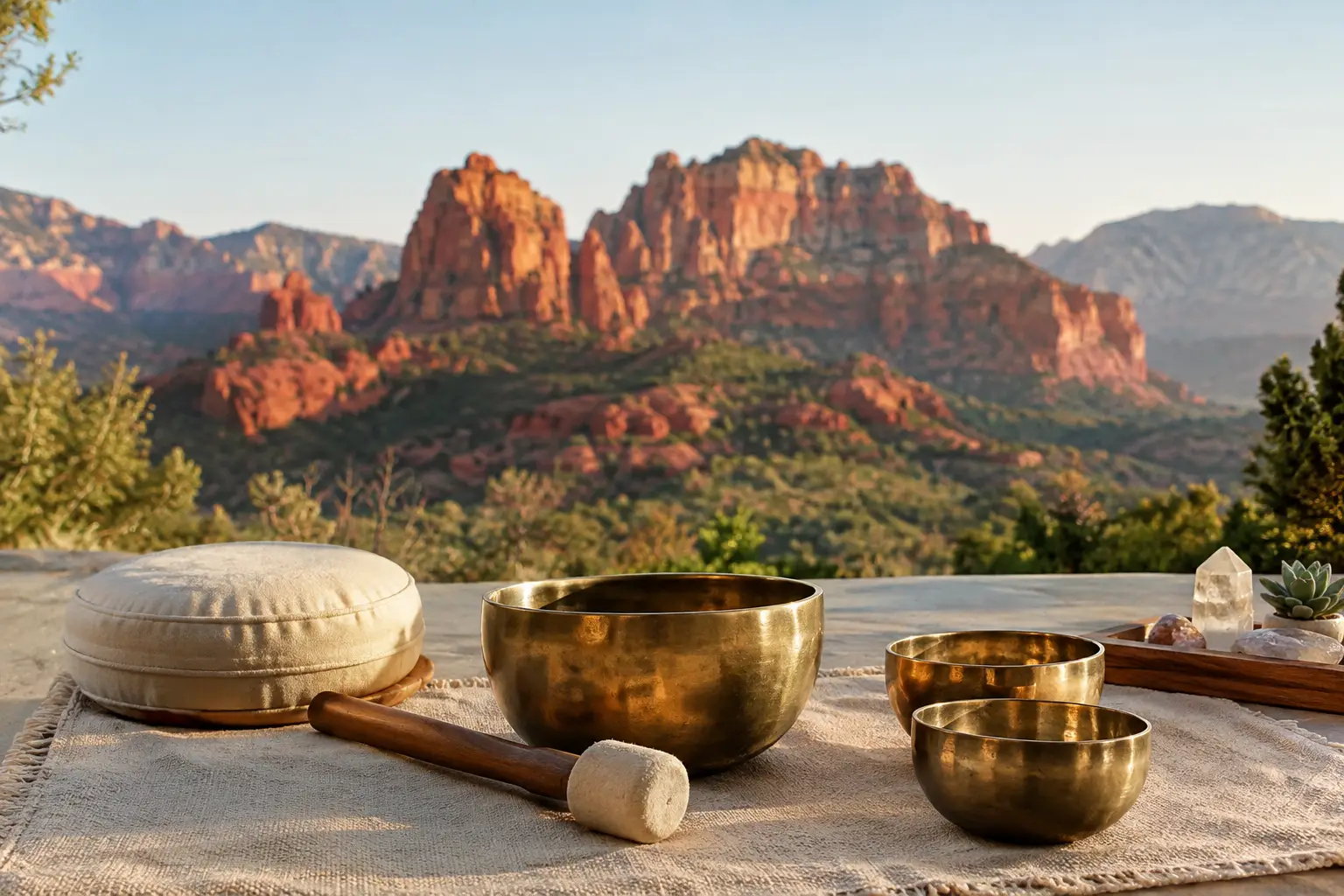

A full day on Sedona’s trails can leave the body pleasantly spent while the mind keeps moving long after sunset. A private sound healing session creates a different kind of pause: an unhurried hour to lie back, soften your focus, and let resonant tones carry you toward rest. In a place where red rocks hold the last light of the day and the desert becomes remarkably quiet, this practice can feel less like an appointment and more like a return to yourself.
For couples, it can be a beautiful shared ritual between a morning hike and a candlelit dinner. For solo travelers, it may become the still point of a restorative escape. The experience is personal by nature, and its value is not in forcing a particular outcome. It is in making room to listen inwardly.
What Happens During a Sound Healing Session
Sound healing is a relaxation practice that uses sustained tones, often created with crystal or metal singing bowls, chimes, and other resonant instruments. A practitioner plays the instruments in a calm, intentional sequence while you rest comfortably, usually fully clothed. The sound is not merely heard. Depending on the instrument, volume, and your position in the room, you may notice a gentle vibration through the body as well.
A session often begins with a few moments of arrival. You may be invited to set an intention, release the pace of travel, or simply notice your breath. There is no need to have a spiritual framework or know exactly what you hope to receive. Some guests arrive with a clear desire for calm, emotional spaciousness, or better sleep. Others come because the idea of resting in sound feels compelling after a season of constant input.
Once the bowls begin, the tones rise, overlap, fade, and return. There may be periods of rich resonance followed by almost complete silence. This contrast matters. The quiet between sounds gives the nervous system room to settle and allows each person to experience the session in their own way.
You might feel deeply relaxed, notice thoughts passing more slowly, or become aware of tension you had not realized you were carrying. Some people remain alert throughout, while others drift into a dreamlike state. Neither response is better. Sound healing is not a performance, and there is nothing to accomplish while you are there.
Why Sound Feels Different in Sedona
The setting shapes the experience. In a busy city, relaxation often requires shutting out noise. In Sedona, the desert itself supports a quieter rhythm. The open sky, warm stone, juniper-scented air, and wide red-rock views can make stillness feel more available before the first bowl is played.
For many visitors, Sedona also carries a sense of energetic significance. Some come specifically to spend time near its well-known vortex sites, while others are drawn by the landscape without attaching a particular belief to it. Both approaches belong here. A sound healing session does not require you to interpret the land in any one way. It simply offers time to be present within it.
That presence can be especially meaningful during a romantic getaway or milestone celebration. Engagements, anniversaries, babymoons, and honeymoons are joyful occasions, but they can also hold anticipation, transition, and the pressure to make every moment memorable. An hour of shared stillness offers a more intimate kind of luxury: nowhere else to be, nothing to arrange, and no need to fill the silence with conversation.
At Eagle Dancer, guest-exclusive wellness experiences are designed to complement the privacy of the estate. Rather than traveling across town or working your schedule around a crowded spa, guests can let restoration unfold as part of their stay, surrounded by the quiet beauty that brought them to Sedona in the first place.
How to Prepare for Your Session
The best preparation is simple. Give yourself a little space before and after the session whenever possible. If you can, avoid scheduling it between a strenuous hike and a tightly timed dinner reservation. A sound experience becomes more spacious when it is not treated as one more item to complete.
Wear comfortable clothing and arrive hydrated. Heavy meals and excess alcohol can make it harder to settle into the body, so a lighter meal beforehand is often more comfortable. If you are attending as a couple, resist the urge to compare experiences immediately afterward. A few quiet minutes together can be more meaningful than trying to name exactly what happened.
You do not need to meditate well, clear your mind, or know how to relax on command. Thoughts may come and go. The invitation is not to suppress them, but to let the tones give your attention somewhere gentler to rest.
If you have hearing sensitivities, migraines triggered by sound, vertigo, tinnitus, or any condition that may affect your comfort, mention it before the session. A skilled practitioner can often adapt the volume, placement, or instrument selection. Sound wellness should feel supportive, never overwhelming. If a tone becomes too intense at any point, it is always appropriate to speak up or shift your position.
A Restorative Practice, Not a Medical Treatment
Many guests seek sound healing because they want to release stress, deepen relaxation, or create a sense of emotional reset. These are meaningful intentions, yet it is wise to keep expectations grounded. A session is a complementary wellness experience, not a substitute for medical care, mental health treatment, or professional support for ongoing symptoms.
Its effect can also vary. One person may leave feeling rested and clear, while another may feel tender, reflective, or simply quiet. Travel fatigue, sleep, hydration, personal history, and the particular day you are having all influence the experience. There is no universal response and no need to judge your own by someone else’s description.
For guests who are new to sound work, one private session is a lovely introduction. For those who already keep meditation, massage, or energy work in their wellness rhythm, sound can be a fitting complement. It pairs especially well with a restorative massage or gentle yoga practice, though spacing these experiences apart can help you appreciate each one fully.
Making Space for What Follows
The session does not have to end when the final tone fades. Consider protecting the hour afterward from screens, errands, and social obligations. Walk slowly through the property, sit with a cup of tea in a private courtyard, take a warm bath, or watch the red rocks change color near dusk. Small rituals help the body recognize that it does not need to rush back into ordinary pace.
For couples, this can become a quiet opening for connection. You may talk about what you noticed, or you may not. A hand held on a walk, a shared meal without phones, or a few minutes watching the stars can say enough. For a solo guest, the same space can become a rare chance to hear your own thoughts without immediately responding to them.
A Sedona stay can hold adventure, celebration, and extraordinary scenery. Let a sound healing session hold the softer part of the journey: the moment you stop reaching for the next view and allow yourself to be fully where you are.