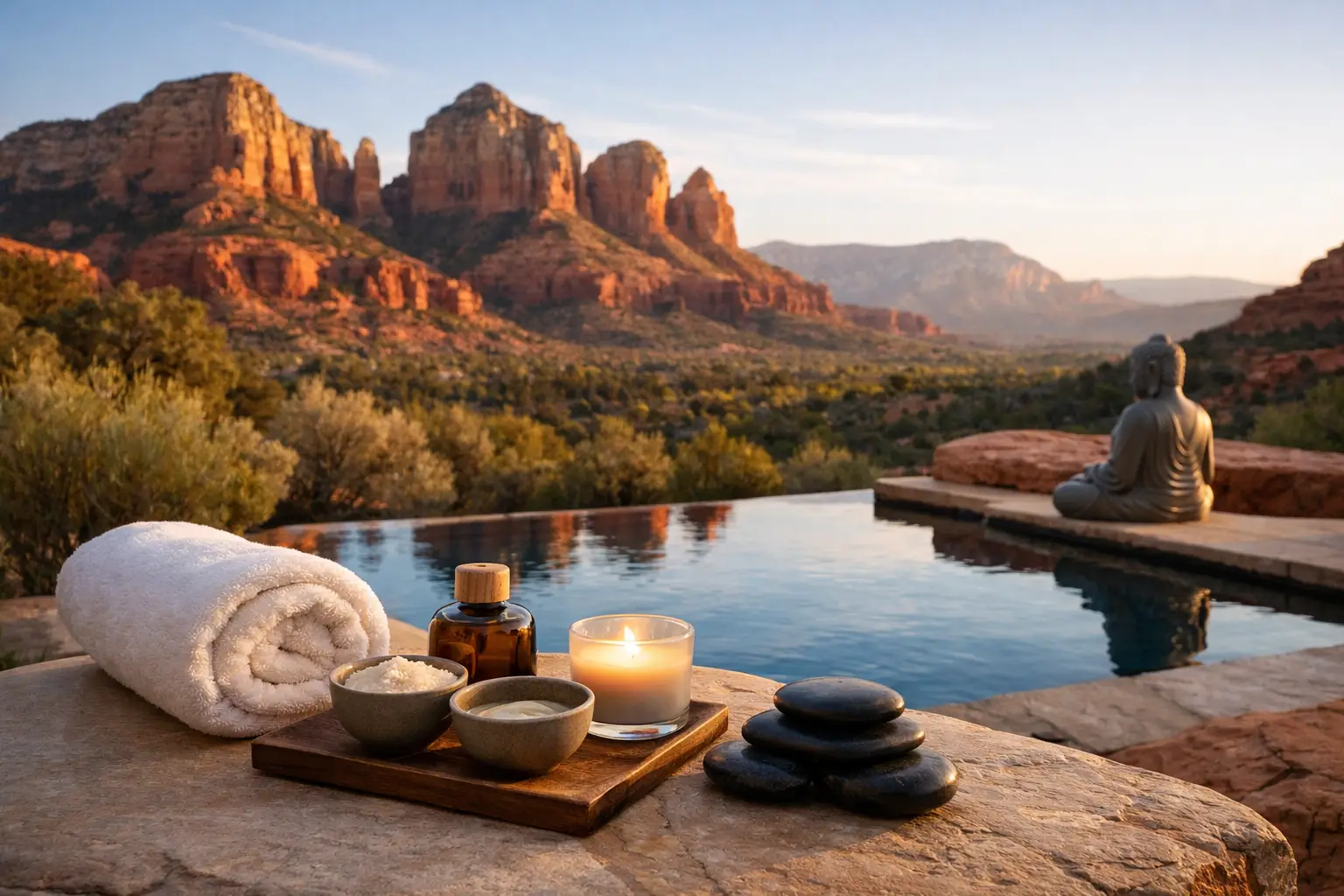

A sunrise climb beneath Sedona’s red rocks can leave you feeling wonderfully alive – and surprisingly tender by afternoon. Your calves may be tight from uneven terrain, your feet may ache inside your hiking boots, and your mind may still be buzzing from the scale of the landscape. If you are wondering which spa treatment suits hikers, the best answer depends less on the trail you completed and more on what your body and nervous system need next.
A restorative spa experience should honor the adventure rather than ask your body to push through another challenge. For some hikers, that means a skillful massage that brings ease to overworked muscles. For others, a quiet sound bowl session, energy healing, or gentle yoga creates the deeper exhale they came to Sedona to find. The most luxurious choice is not necessarily the most intensive one. It is the treatment that lets you receive the desert’s beauty without carrying the strain of the day into tomorrow.
Which Spa Treatment Suits Hikers? Start With Your Body
Before selecting a treatment, take a quiet inventory. Are your legs heavy and stiff? Do your feet feel hot, tender, or rubbed raw? Is your body physically comfortable but your thoughts still racing? These distinctions matter because muscle recovery, skin comfort, hydration, and emotional decompression each call for a different kind of care.
A long hike in dry air can create more fatigue than you expect, particularly for guests arriving from lower elevations or humid climates. Dehydration, sun exposure, and the effort of navigating rocky ground can make aggressive bodywork feel less restorative than intended. Drink water, eat something nourishing, and allow your heart rate to settle before your appointment. If you feel dizzy, nauseated, unusually weak, or have significant pain or swelling, rest first and seek medical guidance rather than booking a treatment.
If You Finished Hiking Today
On the same day as a demanding hike, choose soothing care over intensity. A light-to-moderate relaxation or recovery massage can encourage circulation and ease surface tension without asking fatigued muscles to endure deep pressure. Ask your therapist to focus on the lower legs, hips, shoulders, and back while using pressure that feels comforting, not corrective.
Foot-focused work can be especially satisfying after Sedona trails, but communicate about blisters, bruised toenails, tender arches, or sensitive skin. A thoughtful therapist can adjust the session around those areas. This is not the moment to treat pain as a badge of honor. The goal is to leave feeling grounded, hydrated, and ready to sleep deeply in your private casita.
If You Are Hiking Again Tomorrow
If another trail is calling in the morning, a gentle massage, meditation, or sound bowl healing is often a wiser choice than deep tissue work. Very firm pressure can occasionally leave muscles sore for a day or two, especially when you are not accustomed to it. That trade-off may be worthwhile after your final hike, but it is less ideal before a steep ascent or a full day on the trail.
A slow, supported yoga practice can also help restore range of motion without turning recovery into another workout. Think long holds, deliberate breathing, and attention to the hips, hamstrings, ankles, and chest. Avoid forcing a stretch simply because you can reach farther than usual. Your body has already done meaningful work.
The Best Spa Treatments for Post-Hike Recovery
Recovery Massage for Tired Legs and Feet
For most hikers, massage is the clearest answer. A personalized recovery massage can soften tight calves, release tension through the glutes and hips, and address the shoulder and neck fatigue that comes from carrying a daypack or watching your footing. It is also a chance to become aware of the places you have been compensating – the side of your body that worked harder, the ankle that felt unstable, or the lower back that tightened on descents.
The right pressure is personal. If you are generally active and finished hiking at least a day ago, focused therapeutic work may feel wonderful. If this was your first major hike in months, or you are sore in a diffuse, whole-body way, choose a gentler approach. A gifted practitioner will tailor the treatment rather than applying a fixed routine.
Sound Bowl Healing for a Busy Mind
Not every post-hike need is muscular. Sedona’s trails can be exhilarating, emotional, and expansive. After hours spent moving through wide-open views and sculpted canyon walls, some guests do not need more stimulation. They need stillness.
A private sound bowl healing session offers a different kind of recovery. The tones and vibrations create a quiet container for rest, breath, and reflection. It will not replace care for an injury, but it can be beautiful when your body is pleasantly tired and your mind has not yet slowed down. This treatment is particularly fitting for couples who want to share a serene, intimate reset after a day outdoors, or for solo travelers seeking sacred connection with their own inner rhythm.
Energy Healing for Emotional Reset
Hiking is often more than exercise in Sedona. A trail can mark the beginning of a honeymoon, an anniversary morning, a moment of reflection before an elopement, or a needed pause from a demanding life. When the experience feels emotionally significant, energy healing may be more resonant than bodywork alone.
This gentle modality is designed around relaxation, presence, and personal intention. Guests may choose it when they feel depleted, disconnected, or simply drawn to a quieter form of wellness. Keep expectations open and practical: energy healing is a complementary experience for spiritual and emotional restoration, not a substitute for medical or mental health care.
Restorative Yoga and Meditation for Full-Body Ease
For hikers whose stiffness is mild but widespread, restorative yoga can bring the body back into balance. Supported postures encourage a sense of length through the spine, openness across the hips, and release through the feet and lower legs. Paired with meditation, it creates an unhurried transition from trail time to evening.
This is especially lovely at the beginning of a Sedona stay, when you want to establish a slower pace, or on a rest day between adventures. Rather than chasing flexibility, let the practice be about listening. In a landscape that invites awe, stillness can be its own form of exploration.
When Deep Tissue Massage Is Not the Best Choice
Deep tissue massage has a place, but timing matters. It may be a satisfying option the day after your final hike when you have localized knots, long-standing tension, and nowhere you need to be except a lounge chair, a private courtyard, or a relaxed dinner. It is less appealing immediately after a strenuous hike, when your tissues are already fatigued and you have not fully rehydrated.
Skip intensive work if you have an acute injury, sharp pain, unexplained numbness, significant swelling, sunburn, an open blister, or a medical condition that makes massage unsuitable. Pregnancy, recent surgery, blood-clotting concerns, and certain medications also warrant a conversation with a qualified clinician and your spa practitioner. Quiet luxury includes discernment. No treatment should make you feel that you must ignore what your body is telling you.
Create a Recovery Ritual, Not Just an Appointment
The most memorable wellness experiences often begin before the treatment room. Return from the trail, remove your boots, shower away the red dust, and drink water slowly. Give yourself an hour of unstructured time if possible. A private setting matters here because there is no lobby to rush through and no crowded pool deck competing for your attention.
At Eagle Dancer, the intimacy of a guest-exclusive wellness experience allows the day to unfold at a more personal pace. You can move from red-rock trail views to a tailored massage, sound healing, yoga, or meditation without losing the sense of seclusion that made the hike meaningful in the first place.
For couples, consider choosing complementary treatments rather than identical ones. One partner may need focused massage for tired legs, while the other may be craving a sound bowl session and stillness. The shared luxury is not doing the same thing. It is honoring each person’s version of restoration, then returning to one another more relaxed and present.
Let your treatment be the soft landing after a day of wonder. When you wake the next morning with calmer muscles, a quieter mind, and red-rock light outside your window, the trail will still be there – and you will be ready to meet it with fresh attention.