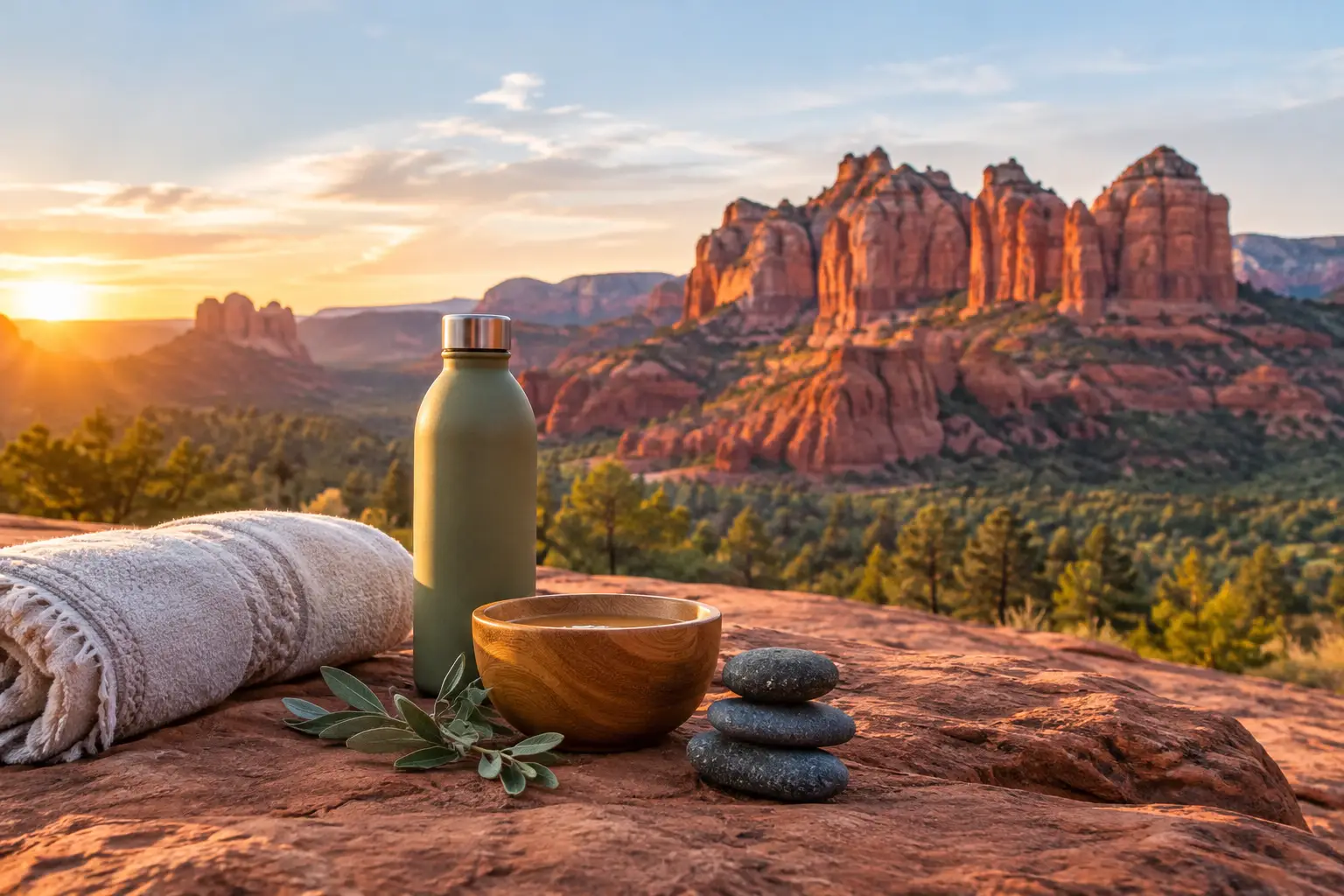

The best post hike recovery rituals begin before the red dust has left your boots. After a morning beneath Sedona’s sculpted sandstone, recovery is not an afterthought or a reward you rush through. It is the gentle second half of the experience: water cooling the body, a nourishing meal, quiet space, and time to let the landscape settle within you.
A demanding trail can leave even experienced hikers depleted. Dry air, elevation changes, sun exposure, and uneven terrain ask more of the body than a step count suggests. The most restorative approach is not complicated, but it does ask you to slow down. Let the afternoon belong to restoration, especially if you want to wake ready for another trail, a romantic dinner, or an unhurried evening beneath the desert sky.
1. Rehydrate with intention, not just volume
The first hour after your hike is the time to replace what the desert has quietly taken. Water matters, of course, but drinking a large bottle all at once is not always the most comfortable or effective approach. Sip steadily as you cool down, and include electrolytes if you have hiked in heat, sweated heavily, or spent several hours on the trail.
Choose a drink that feels replenishing rather than overly sweet. Mineral water, an electrolyte blend, or water with citrus can make the ritual more inviting. Pair it with something lightly salted, such as nuts, broth, or a balanced lunch, especially after a long ascent.
Pay attention to the less glamorous signs of dehydration: headache, fatigue that feels disproportionate, dizziness, dry mouth, or unusually dark urine. If you feel faint, confused, nauseated, or unable to cool down, seek medical care rather than trying to push through the rest of your day.
2. Cool down before you stretch
Many hikers rush straight into deep stretching, but a better first move is to let your heart rate come down. Change out of sun-warmed clothing, find shade or air conditioning, and walk slowly for a few minutes around your casita or courtyard. This gives circulation time to normalize and helps prevent the stiff, cramped feeling that can arrive when you stop abruptly.
Once your breathing has softened, try easy mobility rather than forcing flexibility. Circle your ankles, roll through the feet, gently open the hips, and move your spine through a comfortable range. Sedona trails often involve rocky footing, so your calves, arches, hips, and lower back may need more attention than you realize.
A five-minute reset is enough. The goal is not to achieve a perfect stretch. It is to tell your body that the effort is over and rest can begin.
3. Eat a meal that supports the next day
Post-hike food should feel satisfying, not restrictive. Within a couple of hours, aim for a meal that brings together protein, carbohydrates, colorful produce, and healthy fats. The carbohydrates replenish energy used on the trail, while protein supports muscle repair. A meal with both also helps prevent the late-afternoon crash that can make a beautiful evening feel like an obligation.
Think of grilled fish with grains and vegetables, eggs with avocado and fruit, or a hearty salad with chicken, beans, and a warm side. If your hike was short and relaxed, a lighter meal may be all you want. If you tackled a strenuous route in midday heat, your appetite may arrive later, so keep an easy snack nearby rather than waiting until you feel depleted.
Alcohol can be part of a celebratory Sedona evening, but it is worth approaching thoughtfully after a long hike. Enjoying a glass of wine alongside food and water is different from using it as your primary form of recovery. The desert tends to make that distinction clear by morning.
4. Give your feet the ceremony they deserve
Your feet carried you over every sunlit ledge, patch of slickrock, and dusty switchback. A brief foot-care ritual can transform how the rest of your body feels. Begin by rinsing away trail dust with warm water, then dry carefully between the toes. Check for hot spots, tender nails, blisters, or embedded grit before small irritations become tomorrow’s problem.
For tired feet, a warm soak can be deeply comforting. Follow with a rich moisturizer and a few minutes of slow massage through the soles, heels, and arches. If your calves feel tight, work upward with gentle pressure rather than digging into sore tissue.
Elevating your feet for 10 to 15 minutes is another simple luxury with real value. Lie back with a pillow under your calves, close your eyes, and let swelling ease. In a private setting, this can become a pause for conversation with your partner or a rare moment of complete solitude.
5. Choose bodywork based on what your body needs
A skilled massage after hiking can be one of the most memorable parts of a Sedona stay, particularly when the treatment is paced for recovery rather than intensity. Gentle, flowing massage may be ideal after a long day on the trail, helping ease muscle tension without leaving you more tender. If you are accustomed to deeper work and have time to rest afterward, focused attention on calves, glutes, hamstrings, and the upper back can be helpful.
Timing matters. Some guests prefer a massage several hours after hiking, once they have rehydrated and eaten. Others save it for the following morning, when soreness has had time to reveal itself. There is no universal right answer. The best choice depends on your fitness level, the trail, how much sun you encountered, and what the rest of your itinerary holds.
At Eagle Dancer, guest-exclusive wellness experiences can create a particularly peaceful transition from trail time to restoration, whether that means massage, yoga, sound bowl healing, or quiet meditation. Let the treatment meet the day you actually had, not the day you planned on paper.
6. Make space for stillness after the scenery
Sedona’s trails offer more than physical exertion. The immense scale of the red rocks, the changing desert light, and the hush between footsteps can stir emotion as much as muscle. A recovery ritual that tends only to the body misses part of the experience.
Take 10 quiet minutes without a screen. Sit on a private patio, wrap yourself in a soft robe, and notice where the day still lives in your body. You might journal a few lines about a view that stayed with you, meditate with your breath, or simply watch shadows travel across the rock formations.
For couples, this is a lovely time to share one detail from the trail that each of you noticed. It is a small practice, but it turns a hike into a shared memory rather than another collection of photos. For solo travelers, the same stillness can feel like a return to your own inner rhythm.
7. Protect the evening and prioritize sleep
The final and often overlooked recovery ritual is a calm evening. After an ambitious hike, resist the urge to schedule every remaining hour. Choose a leisurely dinner, a warm shower, comfortable linens, and an earlier bedtime than usual. Sleep is when the body does much of its repair work, and it also determines whether tomorrow’s adventure feels exhilarating or exhausting.
Keep water by the bed, especially in Sedona’s dry climate. If your legs feel restless, use a pillow beneath your knees or calves. A few gentle breaths with a longer exhale can help settle a nervous system that is still carrying the stimulation of sun, effort, and awe.
If you have blisters, sharp joint pain, swelling that worsens, or muscle pain that changes the way you walk, give yourself permission to alter the next day’s plan. Rest is not a missed experience. In a place built for beauty, intimacy, and renewal, it may be the most meaningful choice you make.
The trail does not end when you return to your room. Let it continue in cool water, softened muscles, a nourishing meal, and the quiet privilege of doing less. That is how a day in Sedona stays with you long after the red rocks are out of view.