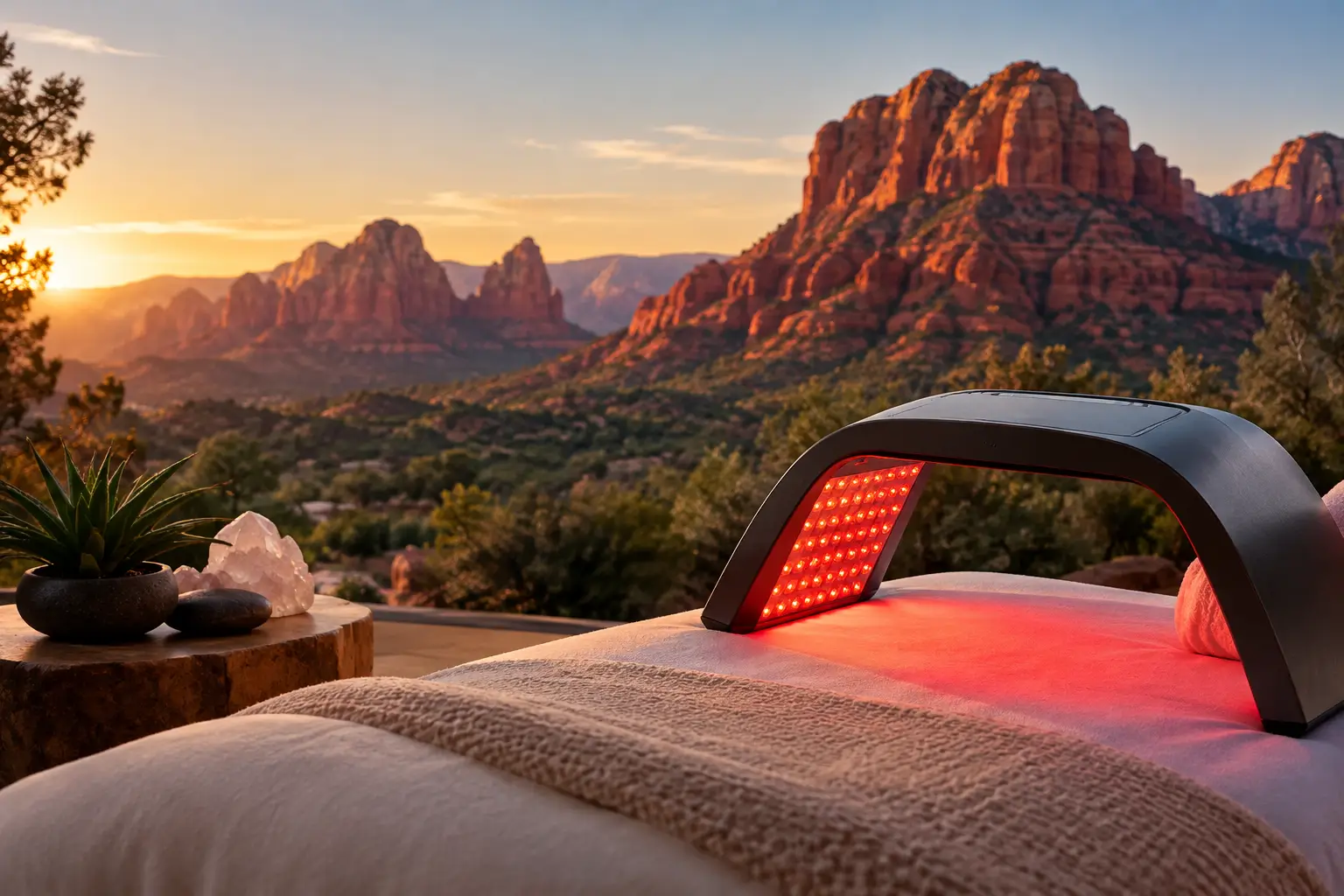

The first morning light on Sedona’s red rocks has a way of inviting the body to soften. Photobiomodulation in Sedona offers another gentle invitation: a carefully timed session of red or near-infrared light designed to support recovery, ease, and a more replenished rhythm during a private wellness escape.
For couples arriving after a full season of work, travel, wedding planning, or caregiving, and for solo guests seeking a true reset, the appeal is not intensity. It is the opposite. This is a quiet, noninvasive wellness modality that can fit beautifully between a sunrise hike, a restorative massage, an afternoon nap, and an unhurried dinner beneath desert stars.
What Photobiomodulation Is – and What It Is Not
Photobiomodulation, often called PBM or red-light therapy, uses specific wavelengths of red and near-infrared light. These wavelengths are studied for their interaction with cells, particularly the mitochondria that help produce cellular energy. The experience itself is simple: you rest near a light panel or device for a prescribed period, without needles, heat-intensive treatment, or downtime.
Guests often seek PBM as part of a broader intention to support post-exercise recovery, temporary muscle or joint comfort, skin appearance, circulation, or a sense of physical renewal. Research in this field continues to evolve, and responses can vary based on the device, wavelength, treatment plan, individual health, and the concern being addressed.
That distinction matters. Photobiomodulation is not a replacement for medical diagnosis, prescription treatment, physical therapy, or care from a qualified clinician. It should never be positioned as a cure. Its value is often more subtle: a low-disruption wellness ritual that may complement a thoughtfully paced stay centered on rest and restoration.
Why Photobiomodulation in Sedona Feels Different
A wellness treatment is shaped by the setting around it. In a busy city, red-light therapy may be one appointment squeezed between traffic, notifications, and the next obligation. In Sedona, it can become part of a slower conversation with your body.
The landscape naturally encourages this shift. Days can begin with quiet trail time as the red rocks warm in the sun, followed by hydration, nourishing food, a bodywork session, and time to simply be still. In that context, photobiomodulation does not need to carry the whole burden of transformation. It becomes one considered layer in a more complete restoration experience.
This approach is especially meaningful for guests who arrive tired but do not necessarily want a highly clinical retreat. A private casita, soft adobe textures, a secluded courtyard, and the spaciousness of the desert create room to unplug + relax. The intention is not to optimize every hour. It is to leave enough space for the nervous system to settle.
For a romantic escape, this can be a beautiful shared ritual. Couples may choose a session after hiking or before a massage, then return to a private evening without a packed itinerary. For a honeymoon, anniversary, babymoon, or renewal getaway, the most luxurious amenity is often time that feels wholly your own.
What a Session May Feel Like
Most people find photobiomodulation sessions calm and straightforward. Depending on the device, you may sit or recline in front of a panel while wearing appropriate eye protection. The light can be bright, but it is generally not meant to feel hot or painful. A provider will guide the duration, positioning, and frequency according to the equipment and your goals.
There is usually no recovery period. Some guests continue on to yoga, meditation, or a gentle walk; others prefer to linger in stillness. Neither choice is more correct. The right pace depends on why you came to Sedona in the first place.
A single session may feel like a welcome pause, particularly after travel or activity. Those seeking a more specific outcome may be advised that consistency matters and that several sessions are often used in research and practice. Be wary of any promise that one visit will dramatically resolve a long-standing concern. The most trustworthy wellness planning leaves room for both possibility and individual variation.
Pairing light therapy with a restorative itinerary
Photobiomodulation is often most enjoyable when it supports, rather than interrupts, the natural flow of a stay. Consider scheduling it after a morning hike, when the body is ready to rest, or before a massage if you want to create a full afternoon of care. A meditation or sound bowl experience afterward can make the transition from activity to stillness feel even more intentional.
If your focus is romance, avoid turning wellness into another checklist. Leave the evening open for a quiet dinner, a soak, conversation in your casita, or simply watching the light change across the rocks. Sedona’s sacred connection is not found by rushing from one modality to another.
For private groups and executive retreats, PBM can also be an appealing optional element within a broader wellness schedule. It offers a discreet, individual experience that can complement movement, meditation, and reflective time. The key is choice. Not every guest will want the same kind of restoration, and a well-designed retreat honors that.
Who Should Pause and Ask First
Although PBM is noninvasive, personalized care still matters. Speak with a licensed medical professional before booking if you are pregnant, managing a serious medical condition, undergoing treatment for cancer, taking photosensitizing medications, have a known light sensitivity, or have concerns involving your eyes or skin. The same care applies if you are recovering from surgery or working with a specialist on an injury.
A qualified provider should welcome these questions. They should explain the type of light being used, how long a session lasts, what protective measures are available, and whether the experience is appropriate for you. Luxury wellness should feel attentive, never vague or pressured.
It is also wise to arrive with a clear but spacious intention. Perhaps you want support for tired muscles after a long hike. Perhaps you are craving a gentler transition out of a demanding season. Perhaps you simply want an hour that belongs to no one but you. Each is a valid reason to slow down.
Choosing a Private Wellness Setting
The best photobiomodulation experience is not only about the equipment. It is about whether the setting allows you to receive it without being hurried back into noise. Privacy, thoughtful pacing, skilled guidance, and the ability to continue resting afterward all shape how the experience lands.
At Eagle Dancer, a stay is designed around this more personal understanding of wellness: guest-exclusive care, intimate surroundings, direct access to Sedona’s extraordinary landscape, and space for experiences that feel tailored rather than transactional. Whether you are planning an elopement, a milestone celebration, a quiet couple’s escape, or a solo reset, the estate setting allows restoration to unfold at your own rhythm.
There is no need to chase a dramatic feeling. Let the treatment be one small act of care, then step outside, feel the desert air, and give yourself permission to remain unhurried.